

OYA MAG • BEAUTY ADVICE
Preparation, choosing a razor, the right technique and aftercare: a method to limit redness, bumps and ingrown hairs on a very curly beard.
Shaving closely can cause redness, stinging and sometimes bumps, especially when beard hairs are very curly. Technique matters as much as the products you use before and after. Here is a simple method to adapt to your skin.
Before shaving: prepare the skin and beard
Gently wash your face with a suitable cleanser and lukewarm water. Shaving after a shower makes it easier, as moisture softens the hairs.
Apply a shaving gel or cream to help the blade glide, following the product instructions. There is no need to rub or exfoliate before every shave.
Trimmer, electric or manual razor: which to choose?

The best tool depends on your beard, your skin and how prone you are to irritation. The key point: avoid cutting too close to the skin if you often get ingrown hairs. Use a clean, well-maintained tool and do not share it.
| Tool | Advantage | Precaution |
|---|---|---|
| Trimmer with guard | Leaves a little hair length; often a good option if you get razor bumps. | Try a setting that leaves about 1 mm, without pressing. |
| Foil electric shaver | Practical and even shave; tolerance varies by model. | Avoid repeated passes and the shortest setting if irritated. |
| Rotary electric shaver | Follows the contours of the face; suits some beards. | Avoid pressing or repeated movements on the neck. |
| Single-blade razor | Good control of the stroke and growth direction. | Clean blade, light pressure, shave with the grain. |
| Multi-blade razor | Very close shave. | Less suitable if ingrown hairs keep coming back. |
An electric shaver is not automatically better than a manual razor. If pseudofolliculitis keeps recurring, a trimmer with a guard is a sensible first option.
Foam, gel, cream or soap: what to choose?
For manual shaving, choose a foam, gel or cream that glides well. For sensitive skin, a fragrance-free formula may be preferable. A clear gel lets you see the beard outline; a cream suits thick hair.
Ordinary soap, especially if it dries the skin, is not the first choice. A dedicated shaving soap can work if it lubricates enough. For a trimmer or electric shaver, check the instructions: some are for dry use only.
The right technique while shaving
- Find the direction your beard grows, especially on the neck, where it often varies.
- Shave with the grain, without pressing or stretching the skin.
- Use short strokes and avoid going over the same area again.
- Rinse the tool regularly and stop if the skin becomes painful.
After shaving: soothe without stacking products
Rinse gently, pat dry without rubbing, then apply a well-tolerated moisturiser. Right after shaving, avoid irritating products, exfoliants and fragrance if your skin reacts. If you have nicks, do not apply unsuitable products to the area.
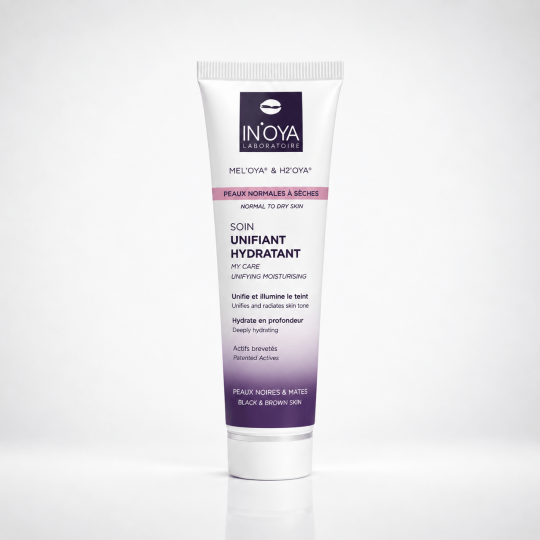
My “Unifying Moisturizing” Treatment MEL’OYA® & H2’OYA®
A day cream for normal to dry skin, applied without rinsing to the face and neck once the skin has calmed down and has no nicks. It contains fragrance: test it first if your skin reacts easily.
Discover the moisturiser →How often should you shave?
There is no ideal frequency. If your skin has bumps, space out shaves or switch to a trimmer for a while. A short beard is a comfortable option: the goal is not necessarily perfectly smooth skin. To look after it, read our guide on how to have a beautiful Afro beard.
When to change blades and how to care for your tools
A dull blade pulls on hairs and forces you to go over the same spot, which increases the risk of irritation. The intervals below are indicative: the manufacturer’s instructions and signs of wear come first.
| Tool | Indicative replacement |
|---|---|
| Disposable or cartridge razor | Around 5 to 10 shaves, sometimes fewer depending on the beard and care. |
| Safety razor | Around 3 to 7 shaves, depending on comfort and sharpness. |
| Foil electric shaver | Foil and cutter block: often 12 to 18 months, depending on the model. |
| Rotary electric shaver | Heads: often 12 to 24 months, depending on the model. |
| Trimmer | Clean regularly; replace blades when they snag or cut poorly. |
Replace a blade straight away if it pulls, scratches or rusts. After each use, remove hairs, clean according to the instructions and let it dry. For skin prone to ingrown hairs, a gentle technique matters more than a fixed schedule.
Shaving brushes, scissors and barber tools
Is a shaving brush essential?
No. It whips up and spreads the lather, but your hands work too. For sensitive skin, choose a soft synthetic brush, kept clean and dry.
Scissors, shavette and straight razor
Barber scissors shorten a long beard without shaving the skin, which helps avoid shaving too close. A shavette draws precise outlines but cuts very close and can cause nicks; a straight razor requires more skill. If razor bumps keep recurring, a finishing trimmer is often better tolerated.
- Is the shavette blade new and changed for each client?
- Are scissors, trimmers and combs cleaned and disinfected between clients?
- Can you avoid shaving bare, repeated passes and working on already irritated skin?
- Can the trimmer leave about 1 mm if I often get ingrown hairs?
How to avoid razor bumps on Black skin
On Black or brown skin, razor bumps mainly appear when hairs grow back into the skin after a cut that is too close: this is called pseudofolliculitis barbae. Prepare the hair, follow the growth direction and avoid stretching the skin or repeated passes.
Do not pick bumps or try to free a hair with a needle: repeated inflammation can leave marks. For causes and how to prevent recurrences, read our article on ingrown hairs on Black and brown skin. If bumps persist, a dermatologist can tell irritation, pseudofolliculitis and infection apart.
Frequently asked questions about shaving
Sources and further reading