Sunscreen and Yuka Ratings: Should You Really Choose Your Sunscreen Based on an App?
When choosing an SPF50 sunscreen, more and more consumers check apps such as Yuka before making a purchase. A high score inspires confidence, while an average or low rating may convince shoppers to avoid a product—even when it provides outstanding protection against harmful UV rays.
However, a Yuka rating does not measure how effective a sunscreen actually is. The app primarily evaluates ingredients according to its own methodology, but it does not assess essential performance criteria such as actual UVA/UVB protection, UV filter photostability, regulatory testing results, or the overall quality and performance of the formula.
When it comes to sun protection, one question should always come first: Does this product truly protect your skin from UV damage? This is precisely where scientific and regulatory standards differ significantly from consumer-oriented rating systems.
Quick Answer
No, you should not choose a sunscreen based solely on its Yuka rating. An app cannot measure the real-world effectiveness of a sunscreen. Before being sold in Europe, every sunscreen must demonstrate its effectiveness through standardized testing that verifies both UVA and UVB protection. As a result, a formula may receive only an average app score while still delivering outstanding dermatological protection.
Key Takeaways
✔ A Yuka rating does not measure the actual effectiveness of a sunscreen.
✔ Sunscreens sold in Europe must comply with some of the world's strictest regulations.
✔ Modern UV filters undergo years of scientific evaluation before being approved.
✔ Strong UVA protection is essential for preventing dark spots and premature skin aging.
✔ The best sunscreen is the one you enjoy applying generously every single day because of its comfortable texture.
Sun Protection Designed First and Foremost to Protect Your Skin
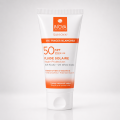
SUN'OYA® SPF50 Sunscreen Fluid was developed by IN'OYA Laboratory to provide very high UVA and UVB protection while addressing the unique needs of Black, mixed, and darker skin tones. Its ultra-light fluid texture, invisible finish, and zero white cast make it ideal for daily use all year round.
Discover SUN'OYA® SPF50 Sunscreen FluidWhy Aren't Yuka Ratings Enough to Evaluate a Sunscreen?
Cosmetic analysis apps such as Yuka respond to a genuine consumer need: helping people better understand the ingredients in the skincare products they use. Their purpose is to provide information about cosmetic ingredients according to various safety and naturalness criteria.
However, sunscreen is one of the most technically complex skincare products to formulate. Its effectiveness depends on numerous factors that rating apps simply cannot measure, including UV filter performance, photostability, optimal filter combinations, formula quality, and the results of mandatory regulatory testing.
In other words, a sunscreen may receive only an average app rating because it contains certain modern UV filters while still delivering exceptional protection validated by independent laboratories under European regulatory standards.
| What Yuka Evaluates | What Yuka Does NOT Evaluate |
|---|---|
| INCI ingredient list | Actual UVA and UVB protection |
| Individual ingredient assessment | UV filter photostability |
| Naturalness criteria | Official SPF regulatory testing |
| Cosmetic ingredient scoring | Overall formula performance on the skin |
Good to Know
In Europe, no sunscreen can be marketed without first proving its effectiveness. Manufacturers must comply with strict regulations covering SPF, UVA protection, UV filter stability, and labeling requirements before a product can be sold.
How Can a Sunscreen Receive a Poor Rating While Still Being Excellent?
This is probably the question consumers ask most often. A sunscreen may receive an average app rating simply because it contains modern organic UV filters that are sometimes viewed negatively by certain rating systems, even though these very filters are what make high-performance, stable, long-lasting sun protection possible.
Filters such as Bemotrizinol (Tinosorb S), Ethylhexyl Triazone, and Uvinul A Plus are widely recognized for their exceptional photostability and their ability to provide outstanding UVA and UVB protection. They are commonly used in many of Europe's highest-performing dermatological sunscreens.
What the Experts Say
Dermatologists consistently emphasize that a sunscreen should primarily be evaluated based on its proven clinical performance, including its UVA protection, SPF value, photostability, and how consistently people are willing to use it every day. A cosmetic rating app simply cannot replace the rigorous scientific testing required before a sunscreen reaches the market.
How Is a Sunscreen Actually Evaluated Before It Reaches the Market?
Contrary to popular belief, a sunscreen cannot be sold simply because its ingredient list appears reassuring. Before being marketed in Europe, every sunscreen must comply with one of the world's most demanding regulatory frameworks.
Each formula undergoes extensive development and testing to demonstrate that it genuinely protects the skin from harmful ultraviolet radiation. Manufacturers must verify the advertised SPF level, prove adequate UVA protection, and demonstrate that the UV filters remain stable during sun exposure.
In other words, sunscreen performance is not determined by a simple list of ingredients. The entire formulation is evaluated to ensure that it meets strict European performance and safety requirements.
| Evaluation Step | Why It Matters |
|---|---|
| SPF Testing | Confirms that the advertised SPF accurately reflects the product's real-world performance. |
| UVA Protection Testing | Ensures adequate protection against premature skin aging and pigmentation. |
| Photostability Testing | Verifies that UV filters remain effective while exposed to sunlight. |
| Regulatory Safety Assessment | Every approved UV filter has undergone extensive scientific evaluation by European authorities. |
Why Is Photostability More Important Than an App Rating?
Although many consumers have never heard of it, photostability is one of the most important indicators of sunscreen quality. It refers to a UV filter's ability to maintain its protective performance after prolonged exposure to sunlight.
If a UV filter quickly degrades under sunlight, the level of protection gradually decreases throughout the day. Highly photostable filters, by contrast, continue protecting the skin consistently during normal sun exposure.
For this reason, modern sunscreen formulations increasingly rely on combinations of advanced UV filters capable of delivering broad-spectrum, long-lasting, and highly stable protection.
Why It Matters
A highly photostable sunscreen protects your skin more consistently and for longer periods. Yet photostability is not reflected in cosmetic rating apps, despite being one of the most important factors for preventing premature aging, pigmentation disorders, and cumulative UV damage.
Mineral Sunscreens vs. Organic UV Filters: Which One Is Better?
The debate between mineral sunscreens and organic (chemical) UV filters has become increasingly popular. Unfortunately, it is often presented in an overly simplistic way.
Mineral filters such as zinc oxide and titanium dioxide are highly appreciated by consumers looking for formulations perceived as more "natural." However, they may produce thicker textures and leave a noticeable white cast, particularly on darker skin tones.
Modern organic UV filters, on the other hand, allow formulators to create lightweight, transparent sunscreens with superior cosmetic elegance while delivering outstanding broad-spectrum UVA and UVB protection thanks to their excellent photostability.
| Criteria | Mineral Filters | Modern Organic Filters |
|---|---|---|
| UVA Protection | Good, depending on the formulation. | Excellent broad-spectrum UVA protection. |
| Photostability | Variable. | Outstanding when advanced filter combinations are used. |
| Invisible Finish | May leave a visible white cast. | Invisible on every skin tone. |
| Daily Comfort | Generally thicker textures. | Lightweight, fluid, and comfortable. |
Why Are Modern UV Filters Sometimes Poorly Rated?
This is one of the biggest paradoxes in modern sun protection. Some of the most advanced and effective UV filters available today may receive mediocre ratings on certain cosmetic analysis apps, even though they are widely used in sunscreens recommended by dermatologists worldwide.
The explanation is straightforward. Consumer rating systems generally assess ingredients individually. European health authorities, however, evaluate the actual safety of the finished product, taking into account approved concentrations, toxicological data, long-term scientific evidence, and the overall benefit-risk balance under normal conditions of use.
In other words, a UV filter may be considered "controversial" by a consumer app while being fully authorized by European regulators and playing a crucial role in delivering high-performance sun protection.
The Most Commonly Used Modern UV Filters
| UV Filter | Primary Protection | Key Advantage |
|---|---|---|
| Bemotrizinol (Tinosorb S) | UVA + UVB | Broad-spectrum protection with exceptional photostability. |
| Ethylhexyl Triazone | UVB | One of the most powerful UVB filters currently available. |
| Diethylamino Hydroxybenzoyl Hexyl Benzoate (Uvinul A Plus) | UVA | Provides outstanding protection against premature skin aging. |
The Real Risk Isn't a Low Rating—It's Poor Sun Protection
For your skin, the greatest danger is not using a sunscreen that contains approved modern UV filters. The real risk is being insufficiently protected from ultraviolet radiation.
Every year, dermatologists remind us that UV exposure is one of the primary causes of photoaging, wrinkles, pigmentation disorders, loss of skin firmness, numerous forms of skin damage, and is a major contributing factor in the development of skin cancer.
For individuals with Black, brown, or darker skin tones, the concern is slightly different but equally important. UVA rays play a significant role in triggering post-inflammatory hyperpigmentation (PIH), melasma, and persistent dark spots that are often difficult to treat.
Key Takeaway
An effective sunscreen significantly reduces daily UVA and UVB damage. Choosing—or rejecting—a sunscreen solely because of an app rating may lead you to select a less suitable formula or one you simply won't enjoy using consistently, ultimately reducing your overall level of protection.
How to Choose the Right Sunscreen in 2026
Instead of focusing exclusively on a cosmetic app score, dermatologists recommend evaluating your sunscreen according to several objective performance criteria. This comprehensive approach provides a much better indication of how well a product will actually protect your skin.
| Essential Criterion | Why It Matters | Recommended Standard |
|---|---|---|
| SPF Protection | Protects against UVB rays responsible for sunburn. | SPF50. |
| UVA Protection | Helps prevent premature aging and pigmentation. | Very high UVA protection. |
| Photostability | Ensures long-lasting effectiveness in sunlight. | Modern photostable UV filters. |
| Texture | Encourages consistent daily application. | Lightweight, fluid, non-greasy. |
| Finish | Prevents visible white residue. | Completely invisible on every skin tone. |
| Skin Tolerance | Supports comfortable year-round use. | Excellent dermatological tolerance. |
Don't Choose Your Sunscreen Based Solely on a Rating
SUN'OYA® SPF50 Sunscreen Fluid was developed using a science-driven approach, combining very high UVA/UVB protection, next-generation photostable UV filters, an ultra-lightweight texture, an invisible finish, and antioxidant ingredients specifically selected for the needs of Black, mixed, and darker skin tones.
Discover SUN'OYA® SPF50 Sunscreen FluidWhy SUN'OYA® SPF50 Sunscreen Fluid Meets the Real Standards of Excellent Sun Protection
At IN'OYA Laboratory, developing a sunscreen has never been about achieving the highest score on a cosmetic rating app. The goal is far more ambitious: creating a high-performance sunscreen that delivers outstanding UV protection while providing such a pleasant user experience that people genuinely enjoy wearing it every single day.
This philosophy is based on a simple observation: even the world's best sunscreen cannot protect your skin if it stays forgotten in a drawer. Heavy textures, greasy finishes, sticky sensations, or visible white residue often lead people to apply too little product—or to stop using sunscreen altogether.
That is why SUN'OYA® SPF50 Sunscreen Fluid was specifically formulated to combine dermatological performance, exceptional cosmetic elegance, and the unique needs of pigmented skin, which has historically been overlooked by many traditional sunscreen formulations.
Benefits of SUN'OYA® SPF50 Sunscreen Fluid
- ✔ Very high SPF50 protection against UVB rays.
- ✔ Enhanced UVA protection to help prevent pigmentation.
- ✔ Advanced combination of next-generation photostable UV filters.
- ✔ Ultra-light fluid texture that absorbs rapidly.
- ✔ Non-greasy finish.
- ✔ Completely invisible on Black, brown, and darker skin tones.
- ✔ No white cast.
- ✔ Layers perfectly under makeup.
- ✔ Suitable for skin prone to blemishes and post-inflammatory hyperpigmentation.
- ✔ Comfortable enough for year-round daily use.
A Formula That Goes Beyond UV Protection
Modern sunscreens do much more than simply filter ultraviolet radiation. Today's best formulations combine advanced UV filters with carefully selected skincare ingredients that help support the skin against oxidative stress and environmental aggressors caused by sun exposure.
SUN'OYA® SPF50 Sunscreen Fluid incorporates several carefully chosen active ingredients that complement UV protection while improving hydration, comfort, and the overall appearance of the skin.
| Active Ingredient | Primary Function | Skin Benefit |
|---|---|---|
| Vitamin E | Antioxidant | Helps neutralize free radicals generated by UV exposure. |
| Vitamin D-Like Active Ingredient Derived from Chicory | Exclusive IN'OYA Innovation | Supports the skin's natural biological defense mechanisms. |
| Glycerin | Hydration | Helps maintain lasting skin comfort throughout the day. |
| Tapioca Starch | Mattifying Agent | Controls excess shine without drying the skin. |
IN'OYA's Expertise
For more than two decades, IN'OYA Laboratory has specialized in developing dermatological skincare products designed specifically for pigmentation concerns affecting Black, brown, and mixed skin tones. This unique expertise has made it possible to create a sunscreen that delivers an entirely invisible finish without compromising the highest standards of UV protection.
The Most Common Mistakes People Make When Choosing a Sunscreen
Beyond cosmetic app ratings, consumers frequently make several mistakes when selecting a sunscreen. These common misconceptions can easily lead to choosing a product that provides less protection—or one that simply won't be used consistently.
8 Common Sunscreen Buying Mistakes
- Choosing a sunscreen solely because of its Yuka rating.
- Assuming that "natural" automatically means better sun protection.
- Ignoring the importance of strong UVA protection.
- Buying a sunscreen with a texture you dislike and won't use consistently.
- Believing that darker skin tones do not require sunscreen.
- Forgetting to reapply sunscreen during prolonged sun exposure.
- Looking only at the SPF while ignoring the overall quality of the formulation.
- Continuing to use sunscreen that has been opened for several years.
A Great Sunscreen Should Above All Protect Your Skin
SUN'OYA® SPF50 Sunscreen Fluid combines very high UVA and UVB protection, advanced photostable UV filters, powerful antioxidant ingredients, and an invisible finish specifically designed for Black, brown, and darker skin tones.
Discover SUN'OYA® SPF50 Sunscreen FluidFrequently Asked Questions About Yuka, SPF50 Sunscreens, and UV Filters
Can You Trust Yuka to Choose a Sunscreen?
Yuka can be a useful tool for reviewing the general ingredient composition of cosmetic products. However, it does not evaluate how effectively a sunscreen protects your skin. It does not measure UVA or UVB protection, photostability, or the results of standardized regulatory testing. For sunscreen, these are the factors that matter most.
Why Do Some Excellent Sunscreens Receive Average Ratings?
Many premium sunscreens rely on advanced UV filters that provide exceptional UVA and UVB protection along with outstanding photostability. Some cosmetic rating apps may penalize these ingredients despite the fact that they are fully approved under European regulations and widely used in dermatology.
Are Chemical Sunscreen Filters Dangerous?
The term "chemical sunscreen" is often misunderstood. Modern organic UV filters authorized in Europe undergo rigorous scientific assessment before approval. They may only be used within concentrations considered safe by European health authorities after comprehensive toxicological evaluation.
Are Mineral Sunscreens Better?
Not necessarily. Both mineral sunscreens and modern organic UV filters are capable of delivering excellent sun protection. The most important factors are the quality of the formulation, broad-spectrum UVA and UVB protection, photostability, cosmetic elegance, and suitability for your skin type.
Why Do People with Darker Skin Need Sunscreen?
Melanin provides some natural protection against UVB rays, but it does not adequately protect against UVA radiation. UVA exposure contributes to premature skin aging, hyperpigmentation, melasma, and post-inflammatory dark spots, all of which are common concerns for Black, brown, and mixed skin tones.
What Is the Best SPF50 Sunscreen?
The best SPF50 sunscreen combines very high UVA and UVB protection, highly photostable UV filters, excellent skin tolerance, and a pleasant texture that encourages daily use. Even the most advanced sunscreen only works if it is applied generously and consistently.
Does SUN'OYA® SPF50 Sunscreen Fluid Leave a White Cast?
No. Its ultra-light fluid texture was specifically developed to provide a completely invisible finish on Black, brown, and darker skin tones. Unlike many traditional sunscreens, it leaves no white residue after application.
Conclusion: Don't Let an App Rating Decide Your Skin's Future
Cosmetic rating apps can be valuable educational tools, but they should never become the sole deciding factor when choosing a sunscreen. A sunscreen is fundamentally a preventive healthcare product whose effectiveness depends on years of scientific research, rigorous regulatory testing, advanced formulation expertise, and validated UV protection standards.
Instead of focusing exclusively on a numerical score, ask the questions that truly matter. Does the product provide strong UVA protection? Are its UV filters highly photostable? Will the texture encourage you to apply it generously every morning? Is the formulation appropriate for your skin type and your pigmentation concerns?
That philosophy is exactly what guided the development of SUN'OYA® SPF50 Sunscreen Fluid. By combining next-generation photostable UV filters, very high UVA and UVB protection, an ultra-light invisible texture, and a formula specifically created for Black, brown, and darker skin tones, it delivers the level of protection modern consumers expect from a premium daily sunscreen.
Protect Your Skin with a Sunscreen Designed for Everyday Wear
Discover SUN'OYA® SPF50 Sunscreen Fluid, developed by IN'OYA Laboratory to deliver very high UVA and UVB protection, a completely invisible finish, and an ultra-light texture specifically formulated for Black, brown, and darker skin tones.
Discover SUN'OYA® SPF50 Sunscreen FluidScientific References
- European Commission – Recommendation 2006/647/EC on the efficacy of sunscreen products.
- Scientific Committee on Consumer Safety (SCCS) – Scientific Opinions on UV Filters Authorized for Cosmetic Products.
- ANSES (French Agency for Food, Environmental and Occupational Health & Safety) – Ultraviolet Radiation Exposure and Risk Prevention.
- World Health Organization (WHO) – Ultraviolet Radiation and Health.
- American Academy of Dermatology – Sunscreen Recommendations.
- British Association of Dermatologists – Sun Protection Guidelines.
- International Commission on Illumination (CIE) – Standards for Measuring UVA Protection.
- Diffey B.L. Sunscreens and UVA Protection. Journal of Cosmetic Dermatology.
- D'Orazio J. et al. UV Radiation and the Skin. International Journal of Molecular Sciences.