How Stress Impacts the Health of Your Skin
Did you know that one in two people report that stress affects their physical appearance? This statistic, far from trivial, illustrates how our emotional state can directly reflect on our skin. Stress, whether acute or chronic, is not just a psychological discomfort: it directly influences the health and appearance of our skin.
Acute stress occurs occasionally, for example during an exam or an important meeting, and triggers temporary bodily reactions. In contrast, chronic stress persists over the long term and has deeper consequences on hormonal, immune, and skin function.
Our skin is often described as a mirror of our internal state. Redness, blemishes, dryness, or dull complexion are signals that our body sends when stress sets in. This article aims to explain the mechanisms behind this link, detail the visible consequences on the skin, and propose practical solutions to protect it.
The Link Between Stress and Skin
The skin is a neuro-immuno-endocrine organ, meaning it interacts continuously with the nervous system, hormonal system, and immune system. When an individual is exposed to stress, all three systems are activated simultaneously, producing biological substances that can deeply alter skin function.
Stress can be acute (occasional) or chronic (prolonged). Chronic stress is particularly harmful, disrupting essential skin functions such as protection, hydration, cell renewal, and immune defense.
Role of the Nervous and Hormonal Systems
Activation of the Autonomic Nervous System
Under stress, the brain activates the autonomic nervous system, particularly its sympathetic branch. This activation triggers the release of neurotransmitters such as adrenaline and noradrenaline. These molecules cause vasoconstriction of skin blood vessels, reducing their diameter.
This reduced blood flow has several consequences:
- Decreased oxygen and nutrient supply to skin cells;
- Slower elimination of metabolic waste;
- Reduced radiance and tissue repair capacity.
The skin then becomes duller, more fragile, and less able to heal.
Activation of the Hypothalamic-Pituitary-Adrenal Axis
Stress also activates the hypothalamic-pituitary-adrenal (HPA) axis, resulting in cortisol secretion by the adrenal glands. Cortisol is the primary hormone involved in the stress response.
At the skin level, cortisol:
- Stimulates sebaceous glands, increasing sebum production;
- Disrupts keratinocyte differentiation (epidermal cells);
- Reduces synthesis of essential epidermal lipids for the skin barrier.
These effects promote clogged pores, inflammatory lesions (acne), and surface fragility.
Effects on Hydration and Cell Renewal
Chronic stress alters the dynamics of cell renewal. Normally, the epidermis renews in about 28 days. Under prolonged cortisol and nerve mediator influence, this cycle slows down and becomes disorganized.
As a result:
- Accumulation of poorly differentiated cells;
- Decreased cohesion between cells of the stratum corneum;
- Increased transepidermal water loss.
The skin becomes drier, less supple, and more permeable to external aggressors such as chemicals, allergens, or microorganisms.
Stress-Induced Skin Inflammation
Stress triggers a systemic inflammatory response by activating the immune system. It notably induces the release of pro-inflammatory cytokines (interleukins, TNF-alpha), which act directly on skin tissues.
These mediators:
- Promote abnormal capillary dilation;
- Increase vascular permeability;
- Stimulate immune cells in the skin (mast cells, lymphocytes, macrophages).
This inflammatory cascade can:
- Exacerbate pre-existing skin conditions such as acne, eczema, or psoriasis;
- Cause redness, itching, and burning sensations;
- Alter epidermal barrier function.
Barrier degradation facilitates the entry of irritants and antigens, perpetuating inflammation and creating a vicious cycle between stress and skin damage.
Influence of Stress on the Skin Microbiome
The skin surface is colonized by a community of microorganisms called the skin microbiome. It plays a crucial role in:
- Protection against pathogens;
- Regulation of local immunity;
- Maintaining skin’s physiological balance.
Stress alters microbiome composition and diversity through:
- Changes in skin pH;
- Alteration of the hydrolipidic film;
- Increased local inflammatory mediators.
This imbalance, called dysbiosis, favors opportunistic microorganism proliferation and weakens natural skin defenses, potentially leading to infections, irritations, and overall reduced skin quality.
Visible Consequences on the Skin
Signs of Accelerated Aging
Stress contributes to premature skin aging. Collagen, essential for firmness and elasticity, degrades faster under cortisol, leading to fine lines, wrinkles, loss of elasticity and hydration, and a dull, tired complexion.
Discover our anti-aging treatment for dark, medium, and mixed skin
Common Skin Problems Linked to Stress
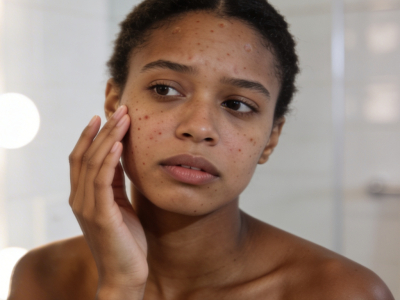
Stress effects extend beyond aging. Inflammatory outbreaks are common, causing acne, redness, and irritation. Those prone to eczema or psoriasis often experience worsened symptoms during stressful periods.
Impact on Overall Appearance
Stress also manifests visibly around the eyes and hair. Dark circles, puffiness, pale or yellowish complexion, brittle nails, and hair loss reflect internal disruption expressed externally.
Psychodermatological Mechanisms
The connection between stress and skin goes beyond biological reaction. Brain-skin communication exists. Anxiety and depressive disorders can worsen skin conditions, creating a vicious cycle: stress causes skin issues, which in turn increase stress.
Modern dermatology recognizes this phenomenon as "psychodermatology," enabling a comprehensive approach combining skincare and emotional management.
Solutions to Protect the Skin
Stress Management
The first step to protect skin is reducing stress. Relaxation techniques like meditation, deep breathing, or yoga are effective. Regular physical activity and quality sleep stabilize cortisol and promote skin regeneration. A structured daily routine and healthy mental habits also limit stress impact on the skin.
Appropriate Skincare During Stress
Under prolonged stress, skin becomes fragile, reactive, and prone to sebum imbalance, inflammation, dehydration, barrier disruption, and microbiome imbalance. Skincare plays a key complementary role to support and limit stress effects.
Key Principles of Skincare
Skincare products should target three main objectives:
- Strengthen the skin barrier and reduce inflammation – with soothing, anti-inflammatory, or reparative actives.
- Maintain hydration and suppleness – using humectants and skin-identical lipids.
- Protect against external aggressors and aging – with antioxidants like vitamin C, E, or other free radical neutralizers.
A Simple 4-Step Daily Routine
- Gentle Cleansing: remove impurities, excess sebum, and pollutants while preserving the hydrolipidic film.
- Targeted Care: anti-inflammatory and sebum-regulating serums or creams to reduce redness, acne, or stress-related irritation; hydrating ingredients or peptides to support cell repair.
- Hydration: creams or lotions with humectants (glycerin, hyaluronic acid) and replenishing lipids to maintain elasticity and suppleness.
- Sun Protection: suitable sunscreens for sensitive skin to limit oxidative stress and prevent premature aging.
The Importance of Dietary Supplements
Alongside topical skincare, certain dietary supplements can provide valuable support during periods of stress or skin imbalances. Their goal is to supplement essential nutrients for the skin and hair, and to support the body against the effects of prolonged stress.
To fight hair loss or strengthen hair fibers: vitamins (biotin, vitamin B5, zinc, selenium) can help maintain healthy hair and nails.
To support weakened skin: supplements containing essential fatty acids, collagen, or antioxidants help maintain the integrity of the skin barrier and the radiance of the complexion.
To limit the effects of stress on the body: some formulations include adaptogenic plants or nutrients that promote relaxation and cortisol regulation.
Theralica Laboratory offers several types of dietary supplements specifically designed to help the body and skin during stressful times, whether to:
- support skin regeneration,
- strengthen hair,
- regulate sebum or skin balance,
- provide nutrients that enhance resilience to stress.
Nutrition and Lifestyle
Nutrition also influences the appearance of the skin. Omega-3s, zinc, and vitamins are essential for healthy skin. Conversely, excessive caffeine, alcohol, or sugar can worsen inflammation and accelerate skin aging. Hydration, often overlooked, remains a fundamental pillar for healthy, radiant skin.
Medical Approaches
When problems persist, consulting a dermatologist is recommended. Specific topical or oral treatments may be prescribed for acne, inflammation, or other conditions. At the same time, support from a psychologist or practicing sophrology can significantly reduce the impact of stress on the skin.
Conclusion
Stress is not just a mental or emotional tension: it has tangible effects on the health and beauty of the skin. Fine lines, imperfections, dull complexion, and increased sensitivity are all signals that our body sends. Understanding these mechanisms allows the adoption of effective routines, combining stress management, appropriate skincare, nutrition, and medical support when necessary.
The good news is that the skin has a remarkable capacity to regenerate. With regular and adapted practices, it is possible to restore its radiance, suppleness, and overall health. By taking care of your mind, you take care of your skin.