Heat and Melasma: Why Heatwaves Make Pregnancy Mask Worse (and How to Protect Your Skin)
Have you noticed your dark spots becoming darker as soon as temperatures rise? You're not alone. Every summer, many women experience a rapid worsening of melasma, also known as the pregnancy mask, sometimes even without direct sun exposure.
Contrary to popular belief, UV rays are not the only culprit. Heat, heatwaves, sweating, and increased skin temperature also stimulate melanocytes—the cells responsible for producing melanin. As a result, dark spots can become noticeably darker within just a few days, even if you spend most of your time indoors.
This reaction is even more pronounced in pregnant women, postpartum women, those using hormonal contraception, and people with Black, Brown, or mixed skin tones, whose melanocytes are naturally more active.
✔ Yes, heat alone can worsen melasma.
✔ UV rays, high temperatures, and hormones work together.
✔ The earlier dark spots are treated, the easier they are to fade.
✔ The right skincare routine can significantly reduce summer flare-ups.
In this article, you'll learn why heat promotes hyperpigmentation, the common mistakes that make pregnancy mask worse during summer, and the best strategies to protect your skin throughout the hottest months.
What Is Melasma (Pregnancy Mask)?
Melasma, often called the pregnancy mask when it develops during pregnancy, is a form of chronic hyperpigmentation. It appears as light to dark brown patches that mainly affect the forehead, cheeks, nose, upper lip, and sometimes the chin.
These patches result from excessive melanin production by melanocytes. This overproduction is mainly triggered by a combination of hormonal, genetic, and environmental factors, including UV radiation, visible light, and heat.
Unlike age spots, melasma usually develops in flare-ups. Heatwaves, summer vacations, pregnancy, and certain hormonal treatments can all cause pigmentation to worsen rapidly.
Who Is Most at Risk of Developing Melasma?
- Pregnant women, due to increased estrogen and progesterone levels.
- Postpartum women whose melasma persists for several months after childbirth.
- People using hormonal contraception (birth control pills, implants, or hormonal IUDs).
- People with Black, Brown, mixed, or Mediterranean skin tones, whose melanocytes are naturally more active.
- Individuals with a family history of melasma.
- People living in hot, tropical, or highly sunny climates.
- People exposed daily to significant heat sources (professional kitchens, industry, hair salons, restaurants, etc.).
Why Does Heat Make Melasma Worse?
When temperatures rise, many people assume that UV rays are the only cause of worsening pigmentation. However, dermatological research now shows that heat itself is an independent trigger that can worsen melasma. In other words, your skin may produce more melanin even without direct sun exposure.
This explains why some women notice their dark spots becoming darker during a heatwave, after exercising, while working in a professional kitchen, or even after spending several hours in a very warm indoor environment.
Heat is now recognized as a factor capable of stimulating melanocytes independently of UV exposure. In people predisposed to melasma, this effect adds to the influence of hormones, UVA rays, and visible light.
Heat Directly Stimulates Melanocytes
Melanocytes are the cells responsible for producing melanin—the pigment that gives skin its natural color. Their primary role is to protect the skin from environmental stress.
When skin temperature rises significantly, melanocytes activate several protective mechanisms. They become more active and produce more melanin. In people without melasma, this response usually remains limited. In those predisposed to melasma, however, melanin production becomes excessive, causing existing dark spots to appear darker or new ones to develop.
Several studies suggest that this heat-related stimulation involves inflammatory mediators, heat shock proteins (HSPs), and heat-sensitive receptors such as TRPV1, all of which may indirectly contribute to melanocyte activation. Although research is ongoing, these findings help explain why melasma often worsens during the summer months.
Why Are Black, Brown, and Mixed Skin Tones More Susceptible?
Melanin-rich skin naturally contains more active melanocytes. This provides excellent protection against the harmful effects of the sun, but it also means these cells respond more intensely when stimulated by hormones, UV rays, or heat.
In Black, Brown, and mixed skin tones, even minor skin inflammation can trigger additional melanin production. This explains why pigmentation disorders such as melasma and post-inflammatory hyperpigmentation are more common and often more persistent.
The Summer Vicious Cycle: Heat + UV Rays + Sweat
In reality, melasma is rarely triggered by a single factor. During periods of extreme heat, several biological mechanisms act simultaneously, creating a true vicious cycle.
- Skin temperature rises.
- Melanocytes produce more melanin.
- Sweating gradually reduces the effectiveness of sunscreen.
- UVA rays and visible light penetrate more easily to the pigment-producing cells.
- Skin inflammation increases.
- Dark spots gradually become darker.
This is precisely why sunscreen alone is not always enough during the summer. Combining high-level sun protection with a targeted anti-dark spot routine helps address several of the biological mechanisms involved in melasma at the same time.
The sun isn't the only enemy of melasma. Combining an anti-dark spot treatment with SPF 50 is the most effective strategy to help prevent summer flare-ups.
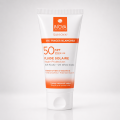
Discover My SPF 50 Sunscreen FluidThe Heatwave Anti-Melasma Protocol: How to Protect Your Skin All Summer Long
During periods of extreme heat, melanocytes become more active. An effective anti-dark spot routine therefore involves more than simply applying a serum or sunscreen—it should simultaneously target pigmentation, inflammation, the skin barrier, and photoprotection.
The goal is simple: reduce as many melasma-triggering factors as possible to prevent dark spots from becoming progressively darker throughout the summer.
✔ Maintain a healthy skin barrier.
✔ Help reduce excessive melanin production.
✔ Protect your skin against UVA rays, visible light, and heat.
✔ Follow your routine consistently every day—even when dark spots begin to fade.
Morning Routine
- Cleanse your skin gently.
Use a mild cleanser to remove excess oil, sweat, and impurities accumulated overnight without disrupting your skin barrier. - Apply an anti-dark spot serum.
Morning is a strategic time, as targeted ingredients help support the skin's natural defense against pigmentation throughout the day. - Moisturize.
Well-hydrated skin is more resilient to environmental stress and recovers more effectively from heat exposure. - Apply a broad-spectrum SPF 50 sunscreen.
Choose a sunscreen that provides strong UVA protection and is suitable for melanin-rich skin. Reapply every two hours during prolonged sun exposure or after heavy sweating.
Your sunscreen is your first line of defense against melasma during a heatwave.
Discover My SPF 50 Sunscreen FluidEvening Routine
- Double cleanse.
Remove sunscreen, sweat, pollution particles, and excess oil accumulated throughout the day. - Apply your anti-dark spot serum.
Nighttime is when the skin's natural repair processes are most active, making it the ideal time for targeted pigmentation care. - Finish with a repairing moisturizer.
Well-hydrated skin recovers more effectively from the heat stress experienced during the day.
The 8 Mistakes That Make Melasma Worse During a Heatwave
Many people believe melasma worsens only because of the sun. In reality, several everyday habits can continuously stimulate melanocytes throughout the summer. Avoiding these common mistakes can significantly reduce seasonal flare-ups.
Daily habits often have a greater impact on melasma than occasional sun exposure.
❌ Mistake #1: Going Outdoors Without SPF 50
Even short periods outdoors expose your skin to UVA rays, which remain one of the primary triggers of melasma. Daily broad-spectrum protection is essential, even on cloudy days.
❌ Mistake #2: Forgetting to Reapply Sunscreen
Sweat, friction, and natural skin oils gradually reduce sunscreen effectiveness. During a heatwave, regular reapplication is essential to maintain protection.
❌ Mistake #3: Stopping Your Anti-Dark Spot Serum During Summer
Many people pause their pigmentation routine during vacation. However, summer is precisely when melanocytes are most active. Maintaining your routine consistently helps reduce seasonal flare-ups.
❌ Mistake #4: Believing Shade Provides Complete Protection
Shade reduces direct sunlight but does not completely block UVA rays or visible light. Your skin may still be exposed to factors that worsen melasma.
❌ Mistake #5: Letting Your Skin Overheat
Spending long periods in very hot environments—such as cars, terraces, professional kitchens, or poorly ventilated rooms—can increase skin temperature and stimulate pigmentation.
❌ Mistake #6: Using Harsh Skincare Products
Aggressive scrubs, irritating cleansers, or products that damage the skin barrier may trigger inflammation, increasing the risk of post-inflammatory hyperpigmentation.
❌ Mistake #7: Picking Pimples or Scratching Your Skin
Any skin injury can stimulate melanocytes in melanin-rich skin, leaving dark marks that may persist for months.
❌ Mistake #8: Waiting Until Dark Spots Become Darker Before Taking Action
Melasma is easier to prevent than to correct. Acting early helps reduce excessive melanin production before pigmentation becomes more established.
How to Cool Your Skin Without Making Melasma Worse
Cooling your skin can improve comfort during a heatwave, but certain habits are better than others.
| Recommended | Avoid |
|---|---|
| Stay in cool, shaded areas | Prolonged exposure to extreme heat |
| Use a fan or air conditioning | Hot steam directly on the face |
| Apply cool (not icy) compresses | Ice directly on the skin |
| Drink enough water | Ignoring dehydration |
Daily SPF 50 protection remains one of the most effective ways to help prevent melasma flare-ups during summer.
Discover My SPF 50 Sunscreen FluidWhy You Should Continue Your Anti-Dark Spot Serum Throughout the Summer
One of the biggest misconceptions is that anti-dark spot skincare should be stopped during summer. In reality, consistent use—combined with proper sun protection—helps support the skin precisely when melanocyte activity is at its highest.
Rather than interrupting your routine, adapt it with gentle skincare, daily SPF 50, regular sunscreen reapplication, and targeted anti-pigmentation products suitable for summer use.
Consistency is one of the most important factors in managing melasma successfully. Small daily actions produce better long-term results than occasional intensive treatments.
Frequently Asked Questions About Melasma During a Heatwave
Can heat alone make melasma worse?
Yes. Recent research suggests that heat itself may stimulate melanocytes and contribute to worsening melasma, even without direct sun exposure. Heat acts together with UV rays, visible light, and hormonal factors.
Should I wear sunscreen even if I stay indoors?
Yes. UVA rays can penetrate through windows, and visible light may also contribute to pigmentation in susceptible individuals. Daily SPF 50 protection is recommended.
Can I continue using my anti-dark spot serum during summer?
Absolutely. Summer is when melanocytes are most active. Continuing a suitable anti-dark spot routine alongside broad-spectrum sun protection helps limit seasonal flare-ups.
Does sweating reduce sunscreen effectiveness?
Yes. Heavy sweating, swimming, and friction gradually remove sunscreen from the skin. Reapply regularly, especially during prolonged outdoor activities.
Is melasma permanent?
Melasma is a chronic pigmentation disorder. Although it can improve significantly with appropriate skincare and strict sun protection, it may return if triggering factors are not controlled.
Which skin types are most affected by melasma?
Melasma most commonly affects women, particularly during pregnancy or while using hormonal contraception, as well as people with Black, Brown, mixed, Asian, Hispanic, or Mediterranean skin tones.
What is the best daily routine for melasma during summer?
Use a gentle cleanser, apply an anti-dark spot serum, moisturize your skin, and finish every morning with a broad-spectrum SPF 50 sunscreen. Reapply sunscreen throughout the day whenever necessary.
Key Takeaways
Heatwaves don't just increase the feeling of warmth—they can also worsen melasma by stimulating melanocytes alongside UV rays, visible light, and hormonal factors.
The most effective approach combines consistent daily sun protection, a targeted anti-dark spot routine, gentle skincare, and healthy habits that help limit heat-induced skin stress.
Protect your skin every day to help prevent melasma from worsening this summer.
Discover My SPF 50 Sunscreen Fluid