
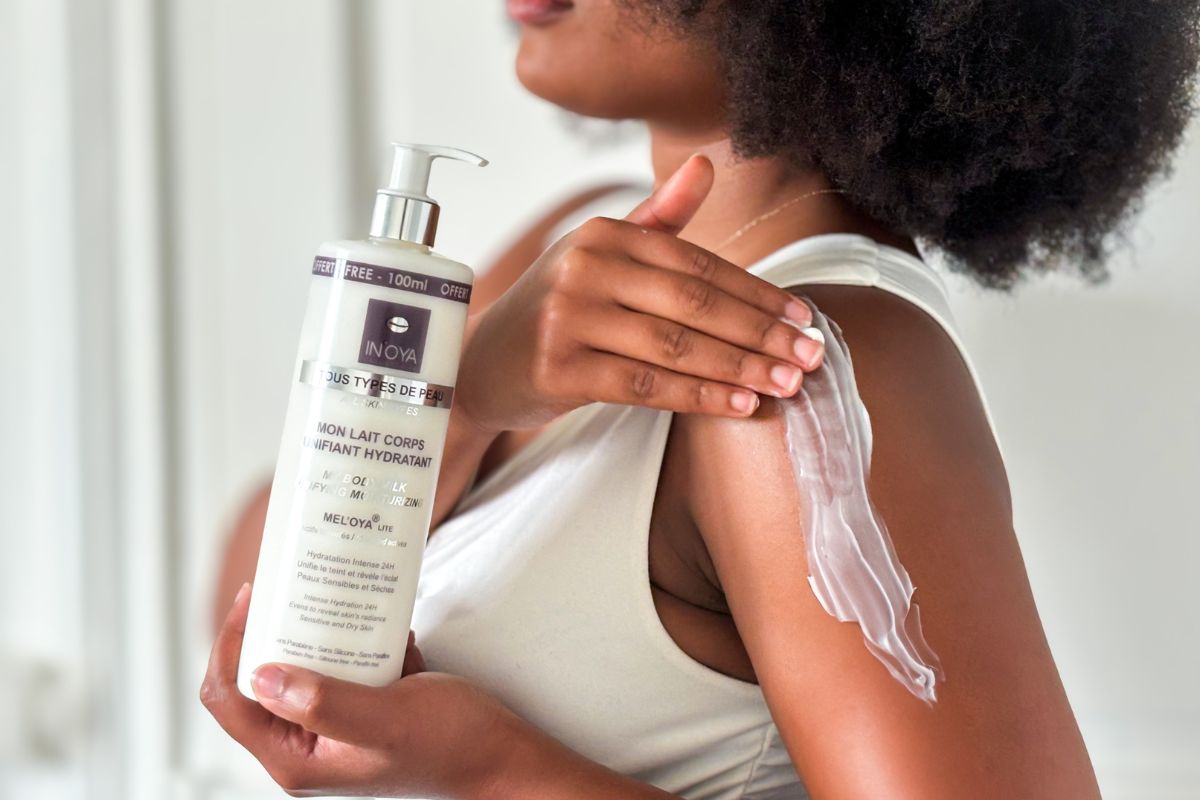

Melasma, Acne Marks or Sunspots: How to Treat Dark Spots on Black, Deep and Melanin-Rich Skin
A dark mark left behind by a breakout, symmetrical brownish patches on the cheeks, spots that show up every summer, or marks that build up gradually with age: on Black, deep or melanin-rich skin, every dark spot can look the same on the surface — but they don't all come from the same place.
That distinction matters more than you'd think. Melasma, post-inflammatory hyperpigmentation (PIH) and solar lentigines (sunspots) don't respond to the same fix. The right skincare, how much SPF you actually need, managing inflammation, and staying consistent all depend on what's driving the pigmentation in the first place.
Skin with higher melanin content has a naturally strong pigment response. When inflammation, UV rays, visible light or hormonal shifts trigger the melanocytes, pigmentation can turn darker and stick around longer. That's exactly why an effective dark spot routine has to do two things at once: fade the marks you can already see, and stop new ones from forming.
Key takeaways
- Melasma: brownish patches, often symmetrical, mostly on the face — heavily influenced by UV, visible light and hormonal factors.
- Post-inflammatory hyperpigmentation: dark marks that show up after a pimple, an eczema flare-up, irritation, a burn or any other inflammatory episode.
- Solar lentigines: well-defined spots that appear gradually on sun-exposed areas.
- On deeper skin tones, irritation itself can trigger new pigmentation — harsh products can actually slow down an even skin tone rather than speed it up.
- Daily sun protection is a non-negotiable part of managing melasma and most forms of hyperpigmentation.
- For melasma and certain dark spots, visible light can play a role too, not just UV.
- The most effective strategy combines treatment + prevention + a protected skin barrier.
How do I know which type of dark spot I have?
A mark that appeared exactly where an old pimple used to be usually points to post-inflammatory hyperpigmentation. Symmetrical brownish patches across the cheeks, forehead or upper lip lean more toward melasma. A single, well-defined brown spot that built up gradually on a sun-exposed area could be a solar lentigo. If you're unsure, if a spot is changing quickly, or if a lesion looks unusual, a dermatologist's opinion is always the safer call.
Dark Spot Routine • Complete Approach
Dealing with stubborn dark spots? Time for a complete routine, not a quick fix
The IN & OUT IN'OYA routine combines several complementary steps to even out your skin tone and tackle pigmentation from every angle.
- Designed specifically for Black, deep and melanin-rich skin
- A full anti-dark-spot approach, not a single stand-alone product
- Gradual, visible improvement in skin tone
- Pair it with daily SPF to keep dark spots from coming back
Dark spot routine • Secure checkout • The full IN'OYA program
Before you treat a dark spot, figuring out where it came from changes everything
Most people search for "best dark spot serum for Black skin" or "how to get rid of brown spots fast." But the real first step is different: understanding why your skin is producing extra pigment in that exact spot.
If active inflammation is what's keeping the pigmentation going, treating the color alone without addressing the inflammation just makes room for new marks.
If melasma is the real issue, even a great brightening routine will underdeliver — or the results won't last — without solid daily sun protection behind it.
And when a mark looks like an unusual pigmented lesion, it shouldn't be treated as a simple cosmetic issue.
| Type of pigmentation | What it usually looks like | Main trigger | Priority |
|---|---|---|---|
| Melasma | Irregular brown patches, often symmetrical | UV, visible light, hormones, predisposition | Daily SPF + consistent brightening routine |
| PIH | A mark left exactly where inflammation used to be | Acne, eczema, irritation, trauma | Control the cause + fade the mark |
| Solar lentigo | A well-defined brown spot | Cumulative sun exposure | SPF + a dermatologist check if unsure |
Melasma: how to spot this hormone-driven, recurring type of pigmentation
Melasma is an acquired form of hyperpigmentation that mostly shows up on sun-exposed areas of the face. It appears as brown patches or spots, usually symmetrical, most commonly on the cheeks, forehead, upper lip and sometimes the chin.
It affects women in particular and is more common on medium to deep skin tones. Pregnancy, hormonal birth control, family history and light exposure can all play a role in triggering it or bringing it back.
The key thing to understand about melasma is that it's a chronic, recurring pigmentation condition. So the goal of a good routine isn't just to lighten what's visible right now — it's to reduce the main triggers that keep bringing it back.
Why does sun exposure trigger melasma so easily?
UV rays activate melanocyte production. On skin that's already prone to melasma, repeated exposure can gradually intensify the pigmentation.
Dermatology research also shows that visible light can contribute to pigmentation on deeper skin tones. That matters a lot for melasma specifically, because sunscreen that only blocks UV won't always cover the full picture.
For melasma, SPF is non-negotiable — but visible light protection deserves attention too
If your skin is prone to melasma, broad-spectrum sun protection needs to be part of your daily routine, no exceptions. When it fits your routine, a tinted formula that also filters part of the visible light spectrum can make a real difference.
Why does melasma come back after it fades?
Because visually clearing some of the pigment doesn't switch off your skin's underlying tendency to overproduce melanin.
A summer season, repeated sun exposure, a hormonal shift, or dropping SPF too soon can all bring the patches back stronger.
That's why melasma treatment works best as an ongoing maintenance routine, not a one-time fix.
Expert tip
With melasma, consistency beats intensity every time
On pigmented skin, aggressive exfoliation or layering too many active ingredients can weaken the skin barrier and trigger even more inflammation. A gradual, well-tolerated routine paired with consistent SPF is almost always the smarter approach.
Olivier Triqueneaux
Doctor of Pharmacy — scientific review of this article
Melasma • Uneven Skin Tone • Stubborn Dark Spots
Build a dark spot routine that actually works for pigmented skin
Chronic pigmentation needs more than a product you reach for occasionally. The IN'OYA routine brings together several complementary steps to gradually even out your skin tone.
Shop the IN & OUT Dark Spot RoutineA consistent routine • For Black, deep and melanin-rich skin • Pair with daily SPF
Post-inflammatory hyperpigmentation: when the pimple's gone but the mark stays
Post-inflammatory hyperpigmentation, or PIH, shows up after skin has been through inflammation or trauma.
It's the classic dark mark that lingers for weeks or even months after a pimple has completely healed. But acne isn't the only cause.
PIH can also follow:
- an eczema flare-up;
- irritation;
- repeated friction;
- a scratch;
- a minor burn;
- a product that was too harsh;
- certain dermatological treatments, when they trigger significant inflammation.
Deeper skin tones are especially prone to this kind of residual pigmentation, because inflammation can trigger a strong melanin response.
The #1 rule: stop creating new dark spots
If you're treating every old acne mark but new breakouts keep showing up, you're stuck in an endless loop: one spot fades while another one appears.
The strategy needs to work on two fronts:
- control active inflammation and prevent new breakouts;
- gradually fade the pigmented marks that are already there.
What's the difference between an acne scar and a dark mark?
PIH is essentially a change in color — the skin surface generally stays flat. A true scar involves a change in skin texture or structure: a dip, a raised bump, or a different surface feel. The two can show up together, but they don't call for exactly the same treatment.
Why does popping pimples make dark marks worse?
Picking, squeezing or repeatedly touching an inflamed breakout adds mechanical trauma on top of the inflammation that's already there.
On deeply pigmented skin, that extra trauma raises the odds you'll be left with a dark mark long after the pimple itself is gone.
The simplest way to prevent PIH: treat the breakout without traumatizing it.
Breakouts + Leftover Dark Marks
Treat the breakouts without forgetting the marks they leave behind
The OYA Dark Spot & Blemish Pack brings together a multi-step routine built for skin dealing with both active breakouts and stubborn pigmented marks.
- Targets blemishes and dark spots in one routine
- Breaks the "new pimple → new mark" cycle
- Formulated for the specific needs of pigmented skin
- A complete routine, not a single spot-correcting product
3-step routine • For Black, deep and melanin-rich skin • Blemish + dark mark program
SPF and PIH: why protect a mark that acne left behind?
A post-inflammatory mark can get darker or take longer to fade when it's regularly exposed to light — even if the sun had nothing to do with causing it in the first place.
That's why sun protection is a key part of any dark spot routine, even when your pigmentation wasn't originally sun-triggered.
If you're dealing with hyperpigmentation, your SPF also needs to feel good enough to actually wear every day. A formula that leaves a heavy white cast on deeper skin tones simply won't get used consistently.
Solar lentigines: when years of sun exposure finally show up
Solar lentigines — often called sunspots or age spots — are pigmented patches that build up gradually on areas exposed to the sun over time.
You'll typically find them on:
- the face;
- the forehead;
- the décolleté;
- the backs of the hands;
- the forearms.
Unlike PIH, a lentigo doesn't appear where an old pimple used to be. It's the cumulative result of years of sun exposure.
On deeper skin tones, these spots can blend in with other types of hyperpigmentation, which makes them easy to misidentify. A new lesion that's changing, multi-toned, or evolving quickly should be checked out — not automatically treated as a simple cosmetic dark spot.
How to treat solar lentigines (sunspots) on Black, deep or melanin-rich skin
Solar lentigines are brown spots linked to cumulative sun exposure. They mostly show up on areas that get regular sun over the years: the face, décolleté, hands and forearms.
On Black, deep or melanin-rich skin, they can be subtler at first, but tend to become more visible over time if exposure continues without enough SPF.
The most effective strategy pairs a consistent brightening treatment with daily sun protection, working on both fading existing spots and preventing new ones from forming.
The move that actually works
With sunspots, staying consistent with SPF matters just as much as the treatment product itself. Without protection, existing spots can keep darkening — or new ones can appear.
SPF 50 • No White Cast • Made for Pigmented Skin
Protect the areas most prone to dark spots, every single day
The IN'OYA SPF 50 Sun Fluid fits right into a dark spot routine, protecting skin from UV rays while staying genuinely pleasant to wear on Black, deep and melanin-rich skin.
- High SPF 50 protection
- UVA/UVB coverage
- Texture built for pigmented skin
- No visible white cast
Daily sun protection • For Black, deep and melanin-rich skin
Melasma vs. PIH vs. lentigines: how to choose the right routine
| Type of spot | Cause | What to do | Product / routine |
|---|---|---|---|
| Melasma | Hormones + light exposure | Consistent brightening routine + SPF | IN & OUT Routine |
| PIH | Inflammation or trauma | Control inflammation + fade the marks | Dark Spot & Blemish Routine |
| Lentigines | Cumulative sun exposure | Brightening treatment + SPF 50 | SPF 50 Sun Fluid |
Why can harsh products make dark spots worse on deeper skin?
When pigmented skin is over-treated, it often reacts with more inflammation. That extra inflammation can, in turn, trigger even more pigmentation — the exact opposite of what you're going for.
That's why an effective dark spot routine shouldn't try to "strip" the skin. Abrasive scrubs, exfoliating too often, and stacking too many active ingredients at once can actually slow your progress down.
The smarter approach: well-tolerated actives, used consistently, with a healthy skin barrier as the foundation.
Mistakes to avoid
- Layering multiple strong exfoliants at once
- Scrubbing pigmented areas hard
- Picking or repeatedly touching breakouts
- Switching routines every week
- Using a strong active without a repairing product to balance it
- Skipping SPF because your skin is deep-toned
Stronger doesn't automatically mean more effective
On skin prone to hyperpigmentation, a product that irritates heavily can end up creating the exact problem you're trying to fix. A gentle, consistent, well-tolerated routine almost always wins over time.
Does repairing the skin barrier actually help prevent dark spots from coming back?
A weakened skin barrier becomes more reactive to irritation, friction and strong actives. And every extra inflammatory flare-up feeds the hyperpigmentation cycle.
Adding a repairing product — especially at night — can make a real difference when your skin feels tight, tingly or sensitized during a treatment routine.
The goal is simple: keep your skin comfortable enough to stick with your dark spot routine consistently.
Repair • Overnight • Skin Barrier
Let your skin repair overnight so it can handle your dark spot routine better
The IN'OYA Repairing Elixir steps in when skin feels weakened, uncomfortable or prone to irritation.
- Overnight treatment
- Supports the skin barrier
- A smart add-on for longer treatment routines
- Helps keep skin more comfortable overall
Overnight repair • For weakened or sensitized skin
What should your morning and evening dark spot routine look like?
A good dark spot routine has to be simple enough to actually stick to every day. How many products you use matters far less than staying consistent with the steps.
Morning
- Cleanse with a gentle product
- Apply your dark spot / brightening treatment
- Moisturize if needed
- Finish with sun protection
Evening
- Remove makeup and cleanse without scrubbing
- Apply your treatment product
- Add a repairing product if your skin shows signs of sensitivity
How long does it take for a dark spot to fade?
It depends on the type of spot, how deep it is, how long it's been there, and how consistent you are with your routine. Superficial post-inflammatory marks can gradually fade over several weeks to a few months. Melasma usually takes longer to manage and needs ongoing control of its triggers.
Online skin diagnostic: a smarter way to pick the right routine
When you're dealing with more than one type of dark spot at once, choosing the right products gets complicated fast. It's common to have post-acne marks and diffuse sun-related pigmentation at the same time.
A diagnostic built around your skin type, history and goals helps you build a more coherent routine — and avoid buying products that don't actually match what's going on with your skin.
Personalized Diagnostic
Not sure if you're dealing with melasma, PIH or something else?
Take the IN'OYA diagnostic to get a routine matched to your skin type, concerns and goals.
Take My Free DiagnosticFree • Online • A routine matched to your needs
Treating a dark spot vs. preventing it from coming back — what's the difference?
Treating a dark spot means targeting the pigmentation you can already see. Preventing it from returning means limiting whatever's still triggering your skin to overproduce melanin.
A routine that actually works has to do both.
| Goal | Action |
|---|---|
| Treat | Use a targeted brightening routine consistently |
| Prevent | Protect skin from exposure and limit irritation |
| Avoid relapse | Keep the routine going even after visible improvement |
Why does an IN & OUT routine make a difference?
Visible hyperpigmentation is mainly managed through the right topical routine paired with consistent SPF. An IN & OUT approach folds that logic into a more complete program.
The real advantage is consistency: instead of piling up random products, you're following a structured protocol with complementary steps.
On stubborn dark spots, that consistency matters even more, because results build up gradually over time.
Scientific Review
A dark spot routine needs to be gentle enough to stick with long-term
On skin prone to post-inflammatory hyperpigmentation, irritation can actually keep the pigmentation going. It's better to aim for gradual improvement paired with consistent SPF than to pile on aggressive treatments.
Olivier Triqueneaux
Doctor of Pharmacy
Which dark spot routine should you choose based on your type of pigmentation?
The key is not treating every dark spot the same way. A truly effective routine should be chosen based on where the pigmentation is coming from, how sensitive your skin is, and your risk of it coming back.
On Black, deep and melanin-rich skin, the priority is twofold: gradually fade the visible spot while avoiding the kind of irritation that can trigger new pigmentation.
| Your concern | Priority | Recommended routine |
|---|---|---|
| Melasma | Even out + protect + prevent relapse | IN & OUT Routine + daily SPF |
| PIH from acne | Control breakouts + fade marks | Dark Spot & Blemish Routine |
| Solar lentigines | Treat + strengthen sun protection | Brightening treatment + SPF 50 |
| Sensitized skin | Repair before adding more actives | Overnight repair + gradual routine |
How long does it take to see improvement on dark spots?
The timeline depends on the type of spot, how deep it sits, how long it's been there, and — above all — how consistent you are with your routine.
A recent post-inflammatory mark can start fading within a few weeks, while melasma usually calls for a longer, more consistent approach.
The most important thing is not to drop your routine the moment you see the first signs of improvement. With recurring pigmentation, the maintenance phase matters just as much as the treatment phase.
What you should actually aim for
Gradual improvement, a more even skin tone, and fewer new spots over time. On skin prone to pigmentation, consistency almost always beats chasing dramatic overnight results.
Should you treat dark spots year-round?
For chronic or recurring pigmentation, yes — it's usually best to keep a maintenance routine going all year.
That doesn't mean using the same intensity of products all the time. Your routine can shift with the seasons, sun exposure, skin sensitivity and the type of pigmentation you're dealing with.
In summer, sun protection becomes especially critical. In winter, some people can gradually step up their treatment products if their skin tolerates it well.
Your summer game plan
- Daily SPF
- Reapply during extended sun exposure
- Keep irritation to a minimum
- Stick with a gentle brightening routine
- Boost hydration if needed
Your winter game plan
- Keep up daily SPF
- Continue your treatment routine
- Add extra repair to support the skin barrier
- Avoid switching routines too often
Complete Routine • Stubborn Dark Spots
Build a dark spot routine you can actually stick to
The IN & OUT IN'OYA routine organizes several complementary steps into one consistent protocol, built specifically for Black, deep and melanin-rich skin.
Shop the IN & OUT RoutineDark spot routine • For pigmented skin • Secure checkout
The most common mistakes when dealing with dark spots
| Mistake | What to do instead |
|---|---|
| Using very harsh products | Fade gradually without weakening the skin barrier |
| Dropping SPF in winter | Keep up sun protection all year |
| Popping pimples | Minimize trauma and manage inflammation |
| Switching routines every week | Give a routine several weeks before judging results |
| Mistaking an unusual lesion for a regular dark spot | See a dermatologist if a lesion is changing |
When should you see a dermatologist about a dark spot?
Not every dark spot can — or should — be treated with skincare alone. Some pigmented lesions need a medical diagnosis.
A dermatologist visit is especially worth it when a spot:
- shows up suddenly with no obvious cause;
- changes size quickly;
- changes color;
- has more than one shade;
- has very irregular borders;
- bleeds;
- becomes painful or just feels off.
Scientific Review
A new or changing spot should be examined, not self-treated
A dark spot routine is meant for hyperpigmentation that's already been identified. An unusual or evolving pigmented lesion should be evaluated by a healthcare professional before being treated as a simple cosmetic dark spot.
Olivier Triqueneaux
Doctor of Pharmacy
FAQ: melasma, PIH, sunspots and Black skin
What's the best dark spot routine for Black skin?
It depends on the type of spot. For melasma, daily SPF and a consistent brightening routine come first. For PIH, you also need to control the inflammation driving the marks. For sunspots, daily sun protection is non-negotiable.
How do you get rid of marks left by pimples?
You need to work on active breakouts and leftover marks at the same time. Avoid popping pimples, use a well-tolerated routine, and stay consistent with SPF to prevent new spots from forming.
Can melasma go away for good?
Melasma tends to be recurring. It can improve dramatically, but the underlying tendency to pigment often sticks around. That's why SPF and a maintenance routine still matter, even after the spots have faded.
Does Black skin really need SPF 50?
Yes — if you're dealing with melasma, PIH or sunspots, SPF helps keep those marks from darkening or sticking around longer. It's genuinely useful even on skin with high melanin content.
Is an acne mark the same thing as a scar?
Not necessarily. PIH is a change in color on skin that's generally still flat. A true scar changes the skin's texture or surface.
Why do my dark spots come back after summer?
UV and visible light can reactivate certain types of pigmentation, melasma especially. A routine without enough SPF during high-exposure periods can bring those spots right back.
Melasma, PIH or sunspots: the bottom line
A dark spot isn't treated based on its color alone. Where it comes from determines the strategy.
Melasma calls for a consistent routine and strict daily SPF. PIH needs you to control the inflammation causing the marks first. Sunspots demand real vigilance around cumulative sun exposure.
On Black, deep and melanin-rich skin, the best approach combines gradual treatment, prevention of relapse, and a protected skin barrier.
A structured routine like the IN'OYA protocols helps you avoid piling up mismatched products and makes it easier to match your steps to your specific type of pigmentation.
Personalized Routine
Identify your type of dark spot and build the right routine
Melasma, PIH, sunspots or a mix of everything: start from your real concern to choose a routine that actually makes sense.
Take My Free DiagnosticFree • Online • Matched to your needs
Scientific and dermatological sources
- American Academy of Dermatology — guidance on hyperpigmentation and dark marks in pigmented skin.
- Journal of Clinical and Aesthetic Dermatology — research on melasma and pigmentary disorders in deeper skin tones.
- Dermatology research on the impact of UVA, UVB and visible light in melasma and hyperpigmentation.
- Dermatology literature on post-inflammatory hyperpigmentation in Fitzpatrick skin types IV–VI.
- IN'OYA — product information, dark spot routines, repairing treatments and sun protection formulated for Black, deep and melanin-rich skin.