
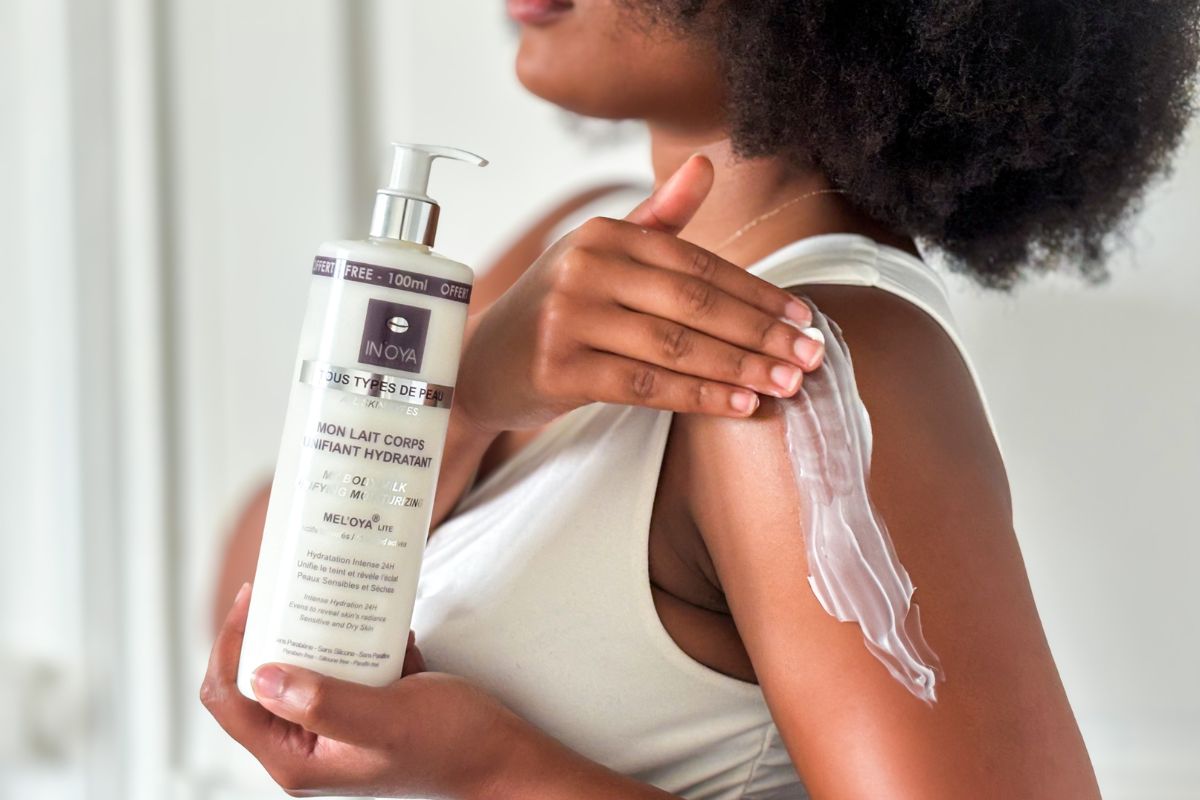

Finding a Dermatologist for Black, Dark, or Mixed Skin Tones
Reviewed by Dr. Olivier Triqueneaux, Pharmacist

Why See a Dermatologist Experienced With Black Skin?
Finding a dermatologist experienced with Black, dark, or mixed skin can make all the difference when it comes to getting an accurate diagnosis and the right treatment plan. Certain skin conditions — such as post-inflammatory hyperpigmentation, melasma, keloid scars, acne, and some forms of alopecia — behave differently on darker skin tones.
Every dermatologist is trained in skin health. That said, some see patients with higher melanin levels on a regular basis and build up particular expertise in managing pigmentation disorders, scalp conditions, or complications linked to cosmetic procedures.
In this complete guide, find out how to choose a dermatologist, where to find one in mainland France and the overseas territories, what the most common reasons for consultation are, and get expert tips from the IN'OYA lab on how to prepare for your appointment.
Pharmacist's Review
This article was reviewed by Dr. Olivier Triqueneaux, pharmacist, to ensure the medical, dermatological, and pharmaceutical information is accurate. The advice shared here is meant to complement medical guidance, not replace a consultation with a healthcare professional.
Key Takeaways
- Every dermatologist is qualified to treat skin conditions.
- For a specific concern, look for a practitioner experienced with Black, dark, or mixed skin.
- Early diagnosis often limits complications and pigmentation marks.
- A tailored skincare routine supports medical treatment — it never replaces it.
How to Quickly Find a Dermatologist Suited to Your Needs
The best approach isn't just searching for a "dermatologist for Black skin." That label isn't an official medical specialty. What actually matters is finding a practitioner who regularly manages your specific concern on Black, dark, or mixed skin.
Depending on your situation, look for experience treating hyperpigmentation, acne, melasma, keloid scars, alopecia, or curly/coily scalp conditions. A practitioner's track record with your specific issue matters more than a general label.
5 Things to Check Before Booking an Appointment
1. Does the practitioner regularly treat your specific issue?
Check whether the dermatologist sees patients for pigmentation spots, acne, melasma, thick scars, hair loss, or scalp conditions.
2. Do they have experience with darker skin tones?
You can ask the front desk whether the practitioner regularly treats patients with skin phototypes IV to VI and issues related to higher melanin levels.
3. Is this a medical, cosmetic, or laser consultation?
Be clear about your needs when booking. A consultation for a skin condition isn't always handled in the same slot as a cosmetic procedure or laser treatment.
4. What's the fee, and are they in-network?
Ask about the practitioner's fee structure, any extra charges above standard rates, and how reimbursement works.
5. Where does the consultation take place?
Check whether the appointment is in-office, at a hospital, or via telehealth, and what documents to bring beforehand.
Where to Look for an Available Dermatologist
Several options can help you find a dermatologist based on where you live, why you need a consultation, and how urgent it is.
| Where to Search | When to Use It |
|---|---|
| National health insurance directory | To verify the practitioner's specialty, address, and fee schedule. |
| Online booking platforms | To filter by availability, location, and specific reasons for consultation. |
| Hospital dermatology department | For complex cases, rare conditions, specialized procedures, or when no appointment is available quickly elsewhere. |
| Primary care physician | To get a first opinion, start initial treatment, and get referred to the right dermatologist. |
| Pharmacist | To assess minor irritation, review your skincare routine, and identify when a medical opinion is needed. |
On mobile, swipe the table sideways to see all the details.
A Medical Diagnosis Always Comes First
A pigmentation spot, pain, a lesion, hair loss, or a reaction to a product shouldn't be treated as a purely cosmetic issue. A skincare routine can support your skin, but it never replaces the diagnosis and treatment a healthcare professional provides.
Want to Better Understand Your Skin's Needs?
The IN'OYA skin diagnostic helps you identify your skin type and build a personalized skincare routine. It's a guidance tool and doesn't replace a medical consultation.
Pharmacist's Tip — Dr. Olivier Triqueneaux
"Before piling on products to treat a spot, a breakout, or irritation, it's important to identify what's causing it. An overly aggressive routine can weaken the skin barrier and trigger new pigmentation marks. If symptoms persist or get worse, ask your pharmacist or see a dermatologist."
Why See a Dermatologist If You Have Black, Dark, or Mixed Skin?
Skin conditions are broadly the same across all skin tones. However, their clinical appearance, progression, and the marks they leave behind vary depending on skin pigmentation.
On skin with higher melanin levels, inflammation from acne, irritation, an insect bite, eczema, or a harsh treatment can leave more visible and longer-lasting post-inflammatory hyperpigmentation. Redness can also appear brown, purplish, or grayish, which sometimes makes it harder to identify.
Keloid scars are also more common on darker skin tones. Certain scalp conditions and forms of alopecia need early treatment too, to prevent permanent hair loss.
Common Reasons for Consultation
- Acne and post-acne marks.
- Pigmentation spots and post-inflammatory hyperpigmentation.
- Melasma or pregnancy mask.
- Eczema, psoriasis, or very dry skin.
- Keloid scars or scars that keep thickening.
- Hair loss, alopecia, or a receding hairline.
- Pain, scabbing, bumps, or persistent itching on the scalp.
- Ingrown hairs and folliculitis after shaving or hair removal.
- A mole or lesion that's changing in appearance.
- A reaction after a peel, laser, or cosmetic product.
- A birthmark or pigmentation difference present since childhood.
- Albinism or another genetic pigmentation disorder.
- Family history of skin conditions, alopecia, or pigmentation disorders.
Pharmacist's Tip — Dr. Olivier Triqueneaux
"Many patients want to fade pigmentation spots quickly by piling on exfoliating or lightening products. But an overly aggressive routine can weaken the skin barrier and trigger new marks. If symptoms persist, ask your pharmacist or see a dermatologist before changing your routine."
Ingrown Hairs, Shaving, and Folliculitis
Curved, curly, or coily hairs can grow back under the skin after shaving or hair removal. This can cause bumps, inflammation, itching, and lasting pigmentation marks.
A dermatologist can confirm pseudofolliculitis, check for infection, and suggest a strategy tailored to the affected area: face, neck, bikini line, underarms, or legs.
Avoid this: don't pop bumps or dig out ingrown hairs with a non-sterile needle. These habits raise the risk of infection, scarring, and post-inflammatory hyperpigmentation.
Eczema, Psoriasis, and Very Dry Skin
On Black or mixed skin, inflammation doesn't always show up as red. It can appear brown, purplish, grayish, or darker than the surrounding skin. This distinct presentation can sometimes delay diagnosis.
Persistent itching, spreading patches, cracks, oozing, discomfort at night, or lingering marks all warrant a medical opinion. For children, a consultation is especially recommended when itching disrupts sleep or daily activities.
| Sign to Watch For | Why It Matters |
|---|---|
| Persistent itching | To identify eczema, psoriasis, an allergy, or another inflammatory cause. |
| Spreading patches | To prevent things from getting worse and choose the right treatment. |
| Cracking or oozing | To rule out infection or significant damage to the skin barrier. |
| Marks left after inflammation | To treat the underlying inflammation first, before targeting pigmentation. |
On mobile, swipe the table sideways to see all the details.
Curly/Coily Hair, Hair Loss, and Scalp Conditions
Dermatologists are also the specialists for hair and scalp health. They can identify traction alopecia, scarring alopecia, ringworm, seborrheic dermatitis, or other causes of hair loss.
See a dermatologist quickly if you notice thinning patches, pain, burning, scabbing, bumps, persistent itching, or a gradually receding hairline. Some forms of alopecia become permanent once they destroy the hair follicles.
How to Prepare for a Hair Loss Consultation
- Bring photos showing how the hair loss has progressed.
- Note down your usual hairstyles.
- List the products, oils, relaxers, or treatments you've used.
- Mention any pain, itching, or burning sensation.
- Note any family history of hair loss.
Keloids and Thick Scars
A keloid scar grows beyond the edges of the original wound. It can keep thickening, itch, become painful, or cause cosmetic and functional discomfort. Keloids are more common in people with darker skin tones.
Depending on the case, treatment may combine topical treatments, injections, compression, certain lasers, or carefully managed surgery. Surgery alone can sometimes lead to an even larger recurrence.
Before getting a piercing, tattoo, or cosmetic procedure: always tell the professional about any history of thick scars or keloids.
Melasma and Facial Pigmentation Spots
Melasma shows up as pigmented patches, often symmetrical, on the forehead, cheeks, upper lip, or chin. It can be triggered by sun exposure, hormones, pregnancy, or certain medications.
A medical diagnosis helps distinguish melasma from post-inflammatory hyperpigmentation, a reaction to a cosmetic product, or another pigmentation disorder. Daily sun protection and consistent treatment are essential to limit recurrence.
Acne and Post-Acne Marks on Black Skin
On skin with higher melanin levels, acne breakouts can leave brown, gray, or purplish marks long after the inflammation has cleared. These marks are usually post-inflammatory hyperpigmentation.
A dermatologist can treat active acne and pigmentation marks at the same time. This matters, because treating the marks alone without controlling new breakouts just keeps the cycle going.
See a Dermatologist If Your Acne Is…
- painful or deep;
- accompanied by nodules or cysts;
- leaving scars;
- persistent despite a gentle routine;
- affecting your confidence or wellbeing.
Dealing With Imperfections or Pigmentation Marks?
Discover IN'OYA skincare formulated for Black, dark, and mixed skin. A skincare routine can support your dermatologist's or pharmacist's advice, but never replaces medical treatment.
Albinism, Birthmarks, and Heredity: When to Get Checked
Albinism is a genetic condition that can affect people of any background, including Black people. It leads to reduced or absent melanin in the skin, hair, and eyes.
Regular dermatological and eye exams matter, because this skin is especially sensitive to UV rays. Without proper sun protection, the risk of precancerous or cancerous lesions is higher.
Birthmarks can be darker, lighter, red, or bluish. Most are harmless and aren't directly hereditary. That said, some pigmentation abnormalities, congenital moles, or genetic conditions can run in families.
Get a Birthmark Checked If It…
- grows quickly;
- changes color or shape;
- becomes thick, painful, or very itchy;
- bleeds or won't heal;
- is very large;
- comes with eye or neurological symptoms;
- runs alongside a family history of pigmentation disorders or skin cancer.
When to Get Medical Help Right Away
Book an appointment quickly if a lesion:
- changes appearance quickly;
- grows, bleeds, or won't heal;
- becomes painful or oozes;
- comes with fever or significant swelling;
- appears after a severe reaction to a product or cosmetic procedure.
Coming Up Next
Find the main dermatology departments across the Paris region, major French cities, and the overseas territories, plus what to check before you travel.
Where to Find a Dermatologist in France and the Overseas Territories
To find a dermatologist experienced with Black, dark, or mixed skin, you can turn to a private practice, a medical center, or a hospital dermatology department. Teaching hospitals in particular have teams equipped to handle complex skin conditions, pigmentation disorders, alopecia, keloid scars, and rarer conditions.
Having a dermatology department doesn't mean every practitioner there treats every condition. Before booking, check which reasons for consultation are accepted, whether a referral letter is needed, and the wait times and booking process.
How to Search Locally the Smart Way
Pair your specific concern with your city or region in a search engine or medical directory.
- "dermatologist Black skin Paris";
- "dermatologist hyperpigmentation Lyon";
- "dermatologist curly hair Marseille";
- "dermatologist keloid scar Bordeaux";
- "hospital dermatology department + your city".
Dermatology Departments in the Paris Region
The facilities below have a dermatology department. Contact them directly to confirm available consultations, wait times, and admission requirements.
Saint-Louis Hospital — Dermatology Department
Address:
1 avenue Claude-Vellefaux
75010 Paris
Phone: +33 1 42 49 49 49
Bichat – Claude-Bernard Hospital — Dermatology Department
Address:
46 rue Henri-Huchard
75018 Paris
Phone: +33 1 40 25 80 80
Henri-Mondor Hospital — Dermatology Department
Address:
51 avenue du Maréchal-de-Lattre-de-Tassigny
94010 Créteil
Phone: +33 1 49 81 21 11
Other Paris Facilities
The facilities below were listed in an earlier version of this article. Their organization, consultations, and contact details may have changed. Always double-check with the facility directly before visiting.
Centre Sabouraud
2 place du Docteur-Alfred-Fournier
75010 Paris
Centre Médical Europe
44 rue d'Amsterdam
75009 Paris
Centre Médical Opéra
31-33 rue Caumartin
75009 Paris
Dermatology Departments in Major French Cities
Bordeaux — Saint-André Hospital
Address:
1 rue Jean-Burguet
33075 Bordeaux Cedex
Phone: +33 5 56 79 49 62
Where to Get Care in the Overseas Territories
The hospitals below have medical services that can refer you or take on a dermatology-related concern. Call ahead to confirm exactly how they operate before you travel.
Guadeloupe — CHU de la Guadeloupe
Route de Chauvel, BP 465
97159 Pointe-à-Pitre Cedex
Main line: +33 5 90 89 10 10
French Guiana — Cayenne Andrée-Rosemon Hospital
Rue des Flamboyants, BP 6006
97306 Cayenne Cedex
Main line: +33 5 94 39 50 50
Réunion — CHU Sud, Saint-Pierre
Avenue François-Mitterrand, BP 350
97448 Saint-Pierre Cedex
Main line: +33 2 62 35 90 00
Mayotte — Centre Hospitalier de Mayotte
Rue de l'Hôpital, BP 04
97600 Mamoudzou
General reception: +33 2 69 61 86 03
French Polynesia — Centre Hospitalier de la Polynésie Française
Avenue du Général-de-Gaulle, Pirae
BP 1640, 98713 Papeete
Main line: +689 40 48 62 62
New Caledonia — Médipôle de Koutio
110 boulevard Joseph-Wamytan
98835 Dumbéa
Main line: +687 20 80 00
Before You Go
- Confirm the dermatology consultation actually exists at that location.
- Ask whether you need a referral letter from your primary doctor.
- Confirm the exact address and building.
- Ask about wait times and what documents to bring.
- Check the fees and reimbursement process.
- Call again to confirm if your appointment was booked months in advance.
Find IN'OYA Skincare Near You
IN'OYA products are available in many pharmacies across mainland France and the overseas territories. They can support your skincare routine alongside your dermatologist's or pharmacist's advice.
Skincare products never replace a diagnosis, prescription, or medical treatment.
After Your Diagnosis
Ask your dermatologist or pharmacist which cleansers, moisturizers, sunscreens, or spot treatments could support your care plan. IN'OYA skincare is developed for Black, dark, and mixed skin, but it should never replace prescribed treatment.
Hyperpigmentation: Why Does Darker Skin Mark More Easily?
One of the top reasons to see a dermatologist if you have Black, dark, or mixed skin is pigmentation spots. Contrary to popular belief, these marks aren't a condition on their own — they're usually the result of inflammation or skin damage.
After an acne breakout, an ingrown hair, an insect bite, a burn, eczema, or even a cosmetic procedure, melanocytes can produce too much melanin. This reaction causes post-inflammatory hyperpigmentation (PIH), which is especially common on darker skin tones.
Key Takeaways
- A pigmentation spot is usually the result of inflammation.
- Treating only the spot without addressing its cause invites recurrence.
- Daily sun protection remains essential, even on Black skin.
- A dermatologist can build a personalized treatment plan based on what's causing the spots.
Be Cautious With Unregulated Lightening Products
Faced with stubborn spots, some people turn to lightening products found online, on social media, or through unregulated channels. But these products can contain banned substances or ingredients used without medical supervision.
Improper use can cause significant irritation, worsen pigmentation spots, thin the skin, or lead to more serious complications. Before using a lightening product, it's best to ask a dermatologist or pharmacist for advice.
Pharmacist's Tip
Be wary of promises of fast results. A sudden lightening effect or severe irritation is never a sign that something is working. Lasting improvement comes from an accurate diagnosis and treatment suited to your skin type.
Want to Fade Pigmentation Spots?
Discover the anti-spot skincare line developed by the IN'OYA lab, formulated for Black, dark, and mixed skin, to support your daily routine alongside your dermatologist's recommendations.
Laser and Peel Treatments on Black Skin: What to Watch For
Cosmetic treatments like laser, pulsed light, or certain peels can be used to address some scars, pigmentation spots, or imperfections. But they call for extra caution on skin with higher melanin levels.
Incorrect settings or a poor treatment choice can cause burns, loss of pigment, or, conversely, lasting hyperpigmentation. That's why these treatments should only be performed by a professional trained in treating darker skin tones.
| Treatment | Key Precaution |
|---|---|
| Pigment laser | Always check the practitioner's experience with darker skin tones. |
| Chemical peel | Choose a protocol suited to your skin to limit the risk of hyperpigmentation. |
| Pulsed light | A medical evaluation is essential before any session. |
Is Telehealth a Good Option?
For some situations, a telehealth visit can give you an initial dermatology opinion. It's especially useful for renewing a treatment, following up on a condition that's already been diagnosed, or reviewing good-quality photos.
But when a lesion needs to be examined by touch, when a biopsy might be needed, or when a full skin exam is required, an in-person visit is still essential.
How to Prepare for Your Appointment
- Take photos to track how your skin changes over time if lesions are evolving.
- Bring past prescriptions and test results.
- List every product you've used recently.
- Note your medical and family history.
- Prepare the questions you want to ask.
Dr. Olivier Triqueneaux's Tip
A good consultation starts with good prep. The more precise information the practitioner has about how your symptoms have evolved, what treatments you've tried, and your skincare habits, the faster they can reach a diagnosis and recommend the right treatment.
Get to Know Your Skin Before Your Appointment
The IN'OYA skin diagnostic helps you understand your skin type and its needs, so you can build a routine that complements your healthcare professional's recommendations.
Frequently Asked Questions
Dr. Olivier Triqueneaux's Take
Most skin conditions can be treated effectively when caught early enough. For people with Black, dark, or mixed skin, it's especially important to treat inflammation quickly, to limit lasting pigmentation marks and scarring.
Don't hesitate to ask your pharmacist or dermatologist for advice before adding a new product to your skincare routine.
Take Care of Your Skin With a Routine That Fits
Since 11 years, the IN'OYA lab has been developing skincare specifically formulated for Black, dark, and mixed skin to support the recommendations of healthcare professionals.
Why Trust the IN'OYA Lab?
- ✔ Over 10 years of research on Black, dark, and mixed skin.
- ✔ Formulas developed from melanin research.
- ✔ Articles reviewed by healthcare professionals.
- ✔ Advice grounded in current scientific recommendations.
- ✔ Available in pharmacies and drugstores.
Scientific Sources
- Haute Autorité de Santé (HAS) — French National Authority for Health.
- Assurance Maladie – Ameli — French National Health Insurance.
- Société Française de Dermatologie (SFD) — French Society of Dermatology.
- Académie Nationale de Médecine — French National Academy of Medicine.
- American Academy of Dermatology (AAD).
- British Association of Dermatologists (BAD).
- Journal of the American Academy of Dermatology (JAAD).
- Dermatologic Clinics.
- Fitzpatrick's Dermatology.