
DOCT'OYA — Skin Conditions & Targeted Skincare
Dehydrated Black and Mixed Skin:
Understanding It, Recognizing It, and Restoring Healthy Hydration
An expert guide to restoring nourished, supple, and radiant skin—with solutions specifically formulated for Fitzpatrick skin types IV to VI.
01 — SKIN BIOLOGY
Is Black Skin Really More Prone to Dehydration?
A common misconception is that Black skin is naturally oily and therefore protected from dryness . The reality is far more complex—and often quite the opposite. Although melanin-rich skin (Fitzpatrick skin types IV to VI) generally has a structurally dense lipid barrier, it can also experience a significantly higher transepidermal water loss (TEWL) than lighter skin tones, particularly in dry climates or when using an unsuitable skincare routine.
To understand why, it is important to distinguish between two concepts that are often confused:
| Criteria | Dry Skin (Skin Type) | Dehydrated Skin (Temporary Condition) |
|---|---|---|
| Nature | Constitutional (lack of sebum) | Acquired (lack of water) |
| Affects | All skin phototypes | All skin types, including oily skin |
| Visible Signs | Dull complexion, ashy appearance, tightness | Dull complexion, visible pores, lack of radiance, ashy appearance, tightness |
| Solution | Nourishing lipids (shea butter, botanical oils) | Humectant ingredients + skin barrier support |
Why Does Dehydrated Black Skin Develop an Ashy Appearance?
Ashiness—that grayish-white appearance often seen on dehydrated dark skin —results from a thinner surface hydrolipidic film combined with a buildup of dead skin cells (corneocytes) that are no longer shed efficiently. On lighter skin tones, this phenomenon is often barely noticeable. On Black and mixed skin, however, the contrast with deeper pigmentation makes it immediately visible and is frequently mistaken for poor skincare rather than what it truly is: a biological sign of dehydration.
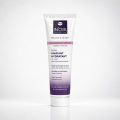
My MEL'OYA® & H2'OYA® Hydrating Tone-Evening Cream
Specifically formulated for dry to very dry Black, dark, and mixed skin. Provides 24-hour hydration, helps even out skin tone, and features a lightweight, non-greasy texture.
The Natural Moisturizing Factor (NMF) is the skin's natural hydration complex, composed of amino acids, lactic acid, urea, and other hygroscopic molecules found within corneocytes. In melanin-rich skin, this natural moisturizing system can be disrupted by products containing harsh alcohols, overly aggressive soaps, or environmental factors such as air conditioning, dry winds, and prolonged sun exposure without adequate protection.
The result is a reduced ability to retain water in the upper layers of the epidermis, leading to increased transepidermal water loss (TEWL), skin discomfort, and the characteristic ashy appearance that is particularly noticeable on Black skin.
```html
02 — DIAGNOSIS
How Can You Recognize Dehydrated Black Skin?
Skin dehydration is not only something you feel—it is also something you can see. Here are the specific signs to look for:
Dull & Ashy Complexion
The skin loses its natural radiance and develops a characteristic grayish cast, particularly visible on the elbows, knees, and face.
Enlarged Pores & Fine Dehydration Lines
Dehydration deepens the skin’s microtexture, making pores appear more visible and causing superficial fine lines that are distinct from deeper expression lines.
Tightness & Discomfort
A sensation of skin feeling tight, especially after cleansing or in air-conditioned environments. The skin may also feel less supple and less plump to the touch.
Dehydration and Hyperpigmentation: A Vicious Cycle
On Black and mixed skin, dehydration can worsen the tendency toward hyperpigmentation . When the skin barrier is weakened, melanocytes—the cells responsible for producing melanin—can become overactivated in response to skin stress. This post-inflammatory hyperpigmentation (PIH) appears as dark spots that may persist for several months or even years without appropriate treatment.
⚠ Warning — Common Mistakes on Melanin-Rich Skin
Using an abrasive exfoliant or an overly stripping foaming cleanser to “brighten” ashy skin is a common mistake that can make dehydration worse. Likewise, applying a brightening product that has not been formulated for Black skin may increase unevenness rather than improve skin tone. It is essential to choose skincare products that have been dermatologically tested on Fitzpatrick skin types IV–VI.
03 — AGGRAVATING FACTORS
Why Is My Skin Becoming Dehydrated?
Several factors—often acting together—weaken the skin barrier of melanin-rich skin and accelerate transepidermal water loss (TEWL):
Climate & Environment
Air conditioning, indoor heating during winter, dry winds, and urban pollution all weaken the skin’s hydrolipidic film. Unprotected sun exposure also increases skin permeability by damaging surface lipids.
An Unsuitable Skincare Routine
Alkaline soaps, overly foaming cleansers, and generic skincare products—often containing denatured alcohols or highly concentrated acids—are among the leading causes of skincare-induced dehydration in Black skin.
Internal Factors
Systemic dehydration (insufficient water intake), certain medications (retinoids, diuretics), chronic oxidative stress, hormonal fluctuations, and skin aging—which naturally reduces ceramide production—all contribute to weakening the skin barrier.
The Specific Needs of Melanin-Rich Skin
Research shows that the stratum corneum of highly pigmented skin has stronger cellular cohesion but also a different lipid composition than lighter skin tones. When this balance is disrupted—by stress or a diet lacking essential fatty acids, for example—the skin barrier recovers more slowly, making the characteristic ashy appearance develop more quickly.
My MEL'OYA® & H2'OYA® Hydrating Tone-Evening Cream
Specifically formulated for dry to very dry Black, dark, and mixed skin. Provides 24-hour hydration, evens skin tone, and features a lightweight, non-greasy texture.
04 — FORMULATION
Which Hydrating Ingredients Should You Choose for Black or Mixed Skin?
Not all moisturizing ingredients are created equal—and some that perform well on lighter skin may trigger inflammatory reactions (and therefore dark spots) on melanin-rich skin. Here are the ingredients that are truly suitable, classified according to their mechanism of action:
Analysis — The Three Levels of Skin Hydration
1. Occlusive Ingredients — They Create a Protective Barrier
Shea butter (Butyrospermum Parkii), triglycerides (Caprylic/Capric Triglyceride), and ceramides create a semi-permeable barrier that limits water evaporation. They are essential for dry to very dry skin.
2. Humectants — They Attract and Retain Water
Glycerin, xylitol (Xylitylglucoside, Anhydroxylitol), acetyl glucosamine, and hyaluronic acid are hygroscopic ingredients that attract water molecules and keep them within the epidermis. They are fundamental components of any effective moisturizing formula.
3. Barrier-Repair Ingredients — They Restore the Skin Barrier
Ceramides (Ceramide NP), essential fatty acids (linoleic and linolenic acid), and nutrient-rich botanical oils (moringa, balanites, and soybean) rebuild the intercellular cement of the stratum corneum, strengthening the skin barrier and improving long-term resistance to environmental aggressors.
My MEL'OYA® & H2'OYA® Hydrating Tone-Evening Cream
Specifically formulated for dry to very dry Black, dark, and mixed skin. Provides 24-hour hydration, evens skin tone, and features a lightweight, non-greasy texture.
Why Are African Botanical Ingredients Particularly Well Suited?
Black and mixed skin has a long cosmetic heritage rooted in the use of African botanical ingredients. Shea butter, moringa, balanites (desert date), and Acacia Senegal are far more than trendy ingredients. Their excellent tolerance and effectiveness on Fitzpatrick skin types IV–VI have been demonstrated through generations of traditional use and later confirmed by scientific research. Their unique profiles of fatty acids, vitamins, and antioxidants perfectly match the lipid-replenishing and repairing needs of dehydrated melanin-rich skin.
05 — OUR SOLUTION
MEL'OYA® & H2'OYA® Hydrating Tone-Evening Cream: A Formula Designed Specifically for You
To overcome the limitations of conventional moisturizers—often overloaded with silicones, lacking targeted active ingredients, and rarely tested on Fitzpatrick skin types IV to VI—IN'OYA Laboratoire developed a precision dermocosmetic solution: the MEL'OYA® & H2'OYA® Hydrating Tone-Evening Face Cream, a patented dual-technology cream specifically formulated for dry to very dry Black, dark, and mixed skin.
My MEL'OYA® & H2'OYA® "Hydrating Tone-Evening" Cream
Patented Dual Technology:
- MEL'OYA® — Tone-evening action: progressively reduces dark spots and evens out the complexion without lightening the skin.
- H2'OYA® — Long-lasting hydration: restores the hydrolipidic barrier and helps retain moisture in the epidermis for up to 24 hours.
Key Active Ingredients: Shea Butter · Moringa Oil · Balanites Oil · Niacinamide (Vitamin B3) · Ceramide NP · Oligopeptide-68 · Glycerin · Xylitol
Lightweight, non-greasy texture · Coconut-Tiaré fragrance · 50 mL · €32.90
INCI Breakdown — What Each Ingredient Does for Your Skin
| INCI Ingredient | Common Name | Primary Benefit |
|---|---|---|
| Butyrospermum Parkii Butter | Shea Butter | Occlusive · Nourishing · Repairing |
| Moringa Oleifera Seed Oil | Moringa Oil | Softening · Antioxidant · Soothing |
| Balanites Roxburghii Seed Oil | Desert Date Oil | Repairing · Softening · Nourishing |
| Niacinamide | Vitamin B3 | Tone-Evening · Dark Spot Correcting · Sebum Regulating |
| Ceramide NP | Ceramide | Barrier Repair · Anti-TEWL |
| Oligopeptide-68 | Patented Active Peptide | Targeted Anti-Hyperpigmentation |
| Xylitylglucoside / Anhydroxylitol / Xylitol | Aquaxyl™ Complex | Humectant · Long-Lasting Hydration |
| Glycerin | Glycerin | Classic Humectant · Immediate Softness |
06 — ROUTINE
The Ideal Anti-Dehydration Skincare Routine for Black and Mixed Skin
Hydration is not achieved with a single step. It relies on a complete and consistent skincare routine, where each step prepares the skin for the next. Here's how to incorporate MEL'OYA® Hydrating Tone-Evening Cream into an optimal skincare routine:
Gentle Cleansing — Morning & Evening
Choose a cleanser specifically formulated for melanin-rich skin, free from harsh sulfates. A gentle cleansing foam preserves the skin's hydrolipidic barrier while preparing it to absorb moisturizing ingredients. Avoid hot water, as it strips away protective skin lipids.
Targeted Serum (Evening, if you have dark spots)
If you have areas of hyperpigmentation, apply the MEL'OYA® Dark Spot Serum directly to the affected areas before your moisturizer. Its Oligopeptide-68 and Acetyl Glucosamine work synergistically with the hydrating cream to accelerate skin tone evening.
MEL'OYA® Hydrating Tone-Evening Cream — Morning & Evening
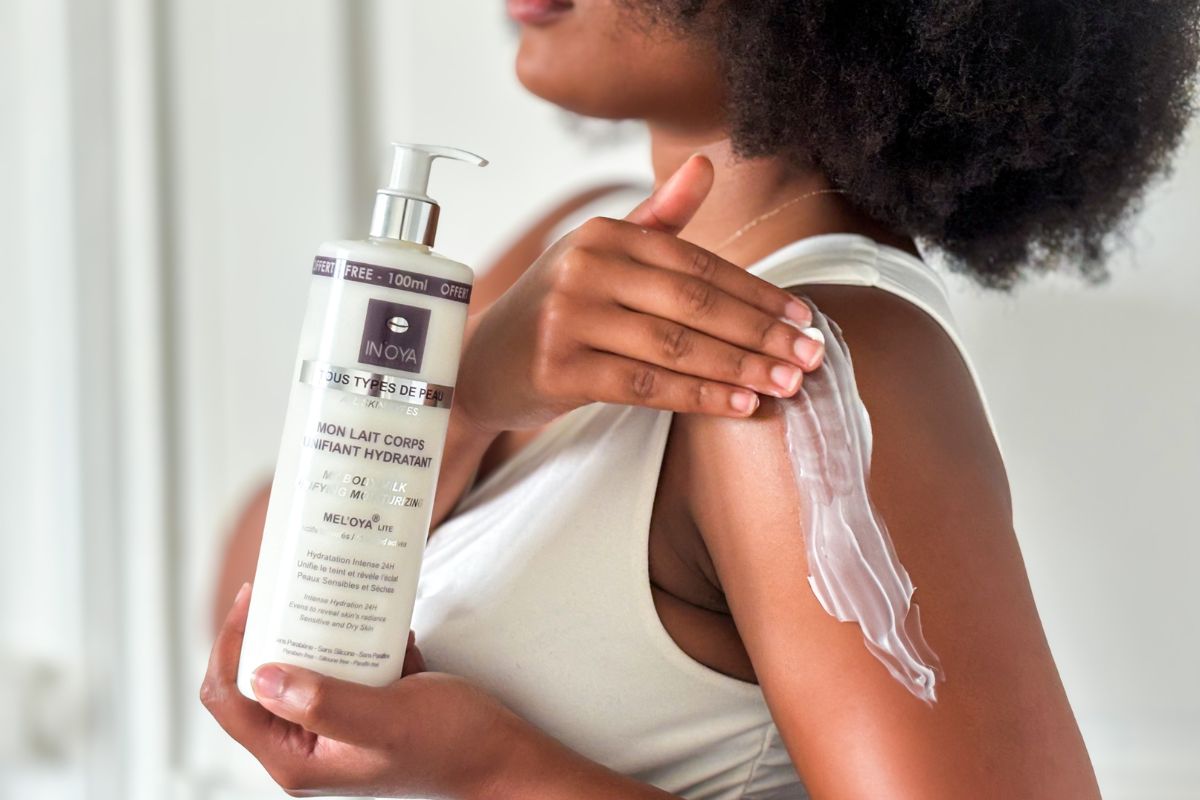
Apply to a freshly cleansed face, neck, and décolleté. Massage gently using upward motions until fully absorbed. Its lightweight, non-greasy texture makes it ideal for use under makeup.
SPF 50 Sun Protection — Morning Only
UV radiation is the leading factor behind worsening hyperpigmentation and skin dehydration. A sunscreen specifically designed for melanin-rich skin, without leaving a white cast, is essential to protect your skin and preserve the results of your moisturizing routine.
Start Your Hydrating Routine Today
Visible results after just 28 days of consistent morning and evening use. Softer, more comfortable skin from the very first applications.
08 — FAQ
Frequently Asked Questions About Hydrating Black Skin
TAKE CARE OF YOUR SKIN
MEL'OYA® & H2'OYA® Hydrating Tone-Evening Cream has been formulated, dermatologically tested, and validated on Black, dark, and mixed skin. Provides 24-hour hydration, evens skin tone, and contains no skin-lightening agents.
Order Now — €32.90⭐⭐⭐⭐⭐ Rated 5/5 by 154 customers · Free shipping on orders over €50
Article written by IN'OYA Laboratoire. This content is provided for informational purposes only and does not replace professional dermatological advice. If you have a diagnosed skin condition, please consult a dermatologist.