
How to Remove Dark Spots on Black, Brown, and Mixed-Race Skin
Learn about the causes of hyperpigmentation, the common mistakes that make dark spots worse, the treatments that are truly effective, and the recommended skincare routine to gradually achieve a more even complexion.
- ✔ Why dark spots develop more easily on Black, Brown, and Mixed-Race skin
- ✔ The main causes of hyperpigmentation
- ✔ The common mistakes that prevent dark spots from fading
- ✔ Dermatologist-recommended solutions
- ✔ Treatments to avoid
- ✔ A complete skincare routine to gradually restore a more even skin tone
Do You Have Dark Spots on Your Face or Body? Here's What You Need to Know.
A pimple that leaves a dark mark for several months. An insect bite that turns darker over time. A scar that remains visible long after the skin has healed. If you have Black, Brown, or Mixed-Race skin, you've probably experienced this before.
In most cases, this is not a disease but post-inflammatory hyperpigmentation (PIH). After inflammation, irritation, or injury, the skin produces more melanin to protect itself. In melanin-rich skin, this natural response is often stronger, causing dark marks to remain visible for several weeks or even months.
The good news is that you can reduce the risk of developing these marks and gradually improve their appearance by following a suitable skincare routine, using targeted active ingredients, and consistently adopting a few simple habits.
- Pigmentation marks are common in melanin-rich skin.
- The more severe the inflammation, the greater the risk of long-lasting discoloration.
- Picking pimples or scabs significantly increases the risk of hyperpigmentation.
- A gentle, consistent skincare routine is often more effective than aggressive treatments.
- Results appear gradually. In most cases, several weeks are needed before noticeable improvement can be seen.
Not Sure Which Skincare Routine Is Right for You?
Every type of hyperpigmentation is different—whether it's caused by acne, sun exposure, hormonal changes, shaving, or scars. Identifying the underlying cause helps determine the most suitable skincare routine.
IN'OYA Laboratories offers a personalized skin diagnosis to help you choose the most appropriate routine based on your skin type and pigmentation concerns.
Why Do Black, Brown, and Mixed-Race Skin Types Develop Dark Spots More Easily?
The main difference between fair skin and melanin-rich skin lies in the amount of melanin produced by melanocytes. This natural pigment provides effective protection against ultraviolet (UV) rays, but it also reacts to every inflammatory event affecting the skin.
Whenever a pimple, burn, ingrown hair, or irritation occurs, melanocytes become stimulated and produce more melanin. This excess production can leave the affected area darker than the surrounding skin, a process known as post-inflammatory hyperpigmentation (PIH).
This reaction is completely natural. It is simply more pronounced in Black, Brown, and Mixed-Race skin, which explains why dark marks often remain visible much longer than they do on lighter skin tones.
Dermatologist's Advice
When treating hyperpigmentation, the goal is not to aggressively attack the skin in an attempt to fade dark spots faster. Instead, preserving the skin barrier, minimizing inflammation, and protecting the skin from UV exposure are the primary recommendations to help prevent pigmentation from becoming more pronounced.
What Are the Main Causes of Dark Spots?
Not all dark spots have the same origin. Identifying the underlying cause helps you choose the most effective prevention strategy and the most appropriate skincare routine.
The Main Causes of Dark Spots
Although pigmentation marks may look different, they often develop through the same process: the skin responds to injury or inflammation by producing more melanin to protect itself. In Black, Brown, and Mixed-Race skin, this response is stronger, which explains why marks can remain visible for months after the original problem has disappeared.
Before trying to fade a dark spot, it's essential to identify what caused it. An effective skincare routine always depends on the source of the hyperpigmentation.
| Cause | Why Does a Dark Spot Develop? | Prevention |
|---|---|---|
| Acne | Inflammation following a breakout | Never squeeze pimples |
| Sun Exposure | UV rays stimulate melanin production | Wear sunscreen every day |
| Ingrown Hairs | Repeated micro-inflammation | Gentle shaving and proper moisturization |
| Cuts or Burns | Skin repair accompanied by excess melanin production | Protect healing skin from the sun |
| Eczema / Dermatitis | Chronic inflammation | Reduce inflammatory flare-ups |
| Pregnancy / Melasma | Hormonal changes | Daily broad-spectrum sun protection |
1. Acne: The Leading Cause of Dark Spots
In melanin-rich skin, even a small pimple can leave a visible mark long after it has healed. This condition is known as post-inflammatory hyperpigmentation (PIH). The more severe the inflammation, the more melanin the skin produces in response.
The biggest aggravating factor is picking or squeezing pimples. Touching, scratching, or popping blemishes significantly increases the risk of long-lasting pigmentation.
Use a gentle cleanser, an appropriate acne treatment, and avoid touching blemishes. The less inflamed your skin becomes, the lower the risk of developing post-acne dark marks.
Does Your Skin Break Out Frequently?
Recurring acne encourages the formation of new dark spots. Treating blemishes early helps minimize post-inflammatory pigmentation. The ACN'OYA skincare range was specifically developed to reduce imperfections while respecting the unique needs of Black, Brown, and Mixed-Race skin.
2. Sun Exposure: An Often Underestimated Trigger of Hyperpigmentation
Contrary to popular belief, Black skin also needs sun protection. Although melanin naturally provides some protection against UV radiation, it does not completely prevent UV rays from stimulating melanocytes and darkening existing pigmentation.
Daily sun exposure without sunscreen can significantly slow the fading of dark spots—even if you are using an effective brightening serum.
When treating hyperpigmentation, applying a broad-spectrum sunscreen every day is strongly recommended to reduce melanin stimulation and help prevent new pigmentation from developing.
3. Ingrown Hairs and Shaving
For many men and some women, ingrown hairs are a frequent cause of hyperpigmentation. Every inflamed hair follicle can leave behind a dark mark after healing.
Beard folliculitis is especially common among people with curly or coily hair. An appropriate shaving routine combined with good skin hydration can greatly reduce this problem.
4. Cuts, Burns, and Scars
Any skin injury can trigger excessive melanin production during healing. As a result, cuts, burns, and even minor scratches may leave persistent dark marks—particularly if the affected area is exposed to sunlight while healing.
In Black, Brown, and Mixed-Race skin, scars are also more likely to become thickened or develop into hypertrophic scars or keloids. Supporting optimal wound healing and protecting healing skin from UV exposure are therefore especially important.
5. Melasma and Hormonal Changes
Some dark patches appear without any injury or acne. Melasma—often referred to as the "pregnancy mask"—is one such condition. It is linked to hormonal changes and is worsened by sun exposure.
Melasma requires a specific treatment approach. If dark spots appear suddenly without an obvious cause, consult a healthcare professional for an accurate diagnosis.
Why Can Dark Spots Take Several Months to Fade?
One of the most common questions is: "Why is my dark spot still visible even though the pimple disappeared months ago?" The answer lies in the skin's natural renewal process. The melanin produced during inflammation does not disappear immediately. Instead, it is gradually eliminated as skin cells renew themselves—a process that varies from person to person and may be slower in certain areas of the body.
Common Mistakes That Prevent Dark Spots from Fading
Many people use multiple dark spot treatments without seeing the results they expect. However, the problem isn't always the product itself. Certain daily habits maintain skin inflammation and naturally slow the fading of hyperpigmentation.
Before choosing a treatment, it's essential to avoid these common mistakes.
The 6 Most Common Mistakes
- ❌ Popping or picking pimples.
- ❌ Using harsh or overly aggressive skincare products.
- ❌ Neglecting daily moisturization.
- ❌ Skipping sunscreen—even on darker skin tones.
- ❌ Constantly changing your skincare routine hoping for faster results.
- ❌ Using unregulated skin-lightening products purchased online or through social media.
Which Treatments Are Truly Effective Against Dark Spots?
Unfortunately, there is no miracle treatment capable of erasing hyperpigmentation in just a few days. The most effective approach combines several complementary actions: reducing inflammation, protecting the skin, supporting its natural renewal process, and preventing new dark spots from forming.
The most appropriate treatment also depends on the cause of the pigmentation, how long the marks have been present, and your skin type. Recent post-acne marks require a different approach than melasma or long-standing scars.
Comparison of the Main Treatment Options
| Treatment | Purpose | Suitable for Black Skin? |
|---|---|---|
| Daily dermocosmetic skincare routine | Prevent and gradually fade dark spots | ⭐⭐⭐⭐⭐ |
| Hydroquinone (prescription only) | Targeted medical treatment | Medical supervision required |
| Chemical peel | Promote skin renewal | Only when medically appropriate |
| Pigment laser treatment | Specific types of hyperpigmentation | Should be evaluated by an experienced dermatologist |
Expert Advice
For melanin-rich skin, the most aggressive treatments are not necessarily the most effective. Additional irritation can actually trigger... more hyperpigmentation. That's why dermatologists generally recommend a gradual treatment approach that protects the skin barrier and includes daily sun protection.
Be Careful with "Miracle" Skin-Lightening Creams
Many products sold online and promoted on social media claim to erase dark spots within just a few days. These promises should be treated with great caution.
Some skin-lightening creams contain powerful depigmenting agents such as hydroquinone or topical corticosteroids. When used without medical supervision, these ingredients may weaken the skin and lead to significant side effects—particularly in Black, Brown, and Mixed-Race skin.
The risks extend beyond simple irritation. Improper use may lead to more complex pigmentation disorders, including uneven depigmentation or forms of exogenous ochronosis.
Before using any powerful skin-lightening treatment, always seek advice from a healthcare professional. A consistent skincare routine that respects your skin's natural balance is often the recommended first step before considering stronger medical treatments.
Fight Hyperpigmentation Every Day
Improving hyperpigmentation is primarily about consistency. IN'OYA Laboratories has developed a patented skincare routine specifically designed for Black, Brown, and Mixed-Race skin to help gradually even out skin tone while respecting the skin's natural balance.
Combined with gentle cleansing, daily moisturization, and proper sun protection, this routine supports the skin throughout its natural renewal cycle.
Why Is a Daily Skincare Routine More Effective Than Occasional Treatment?
Dark spots do not disappear overnight. They gradually fade as the epidermis naturally renews itself. Applying a skincare routine every day helps keep the skin hydrated, reduces new inflammation, and supports this natural process. Consistency remains one of the most important factors for achieving visible, long-lasting results.
The Recommended Dark Spot Routine for Black, Brown, and Mixed-Race Skin
No single product can completely eliminate hyperpigmentation on its own. The best results come from combining several complementary steps into a daily skincare routine: gently cleansing the skin, maintaining optimal hydration, gradually targeting dark spots, and protecting the skin from UV exposure.
At IN'OYA Laboratories, this philosophy is at the heart of the MEL'OYA® skincare range. Each product has been developed to support a specific step of the routine, helping the skin renew itself naturally while minimizing the risk of new pigmentation.
- ✔ It targets the underlying causes of hyperpigmentation.
- ✔ It helps prevent new dark spots from forming.
- ✔ It protects the skin barrier.
- ✔ It gradually improves overall skin tone.
Step 1: Cleanse Your Skin Morning and Night
Proper cleansing is essential before applying any dark spot treatment. Pollution, excess oil, makeup, sunscreen, and dead skin cells build up throughout the day and may contribute to breakouts and inflammation that lead to post-inflammatory hyperpigmentation.
However, cleansing should always remain gentle. Over-cleansing or stripping the skin barrier can increase inflammation and slow the fading of pigmentation.
- Dry or sensitive skin: choose a gentle micellar water.
- Combination to oily skin: use a purifying cleansing foam.
Step 2: Moisturize and Even Out Skin Tone Every Morning
Well-hydrated skin is better equipped to defend itself against external aggressors and recover after inflammation. That's why daily moisturization is a key step in any hyperpigmentation routine.
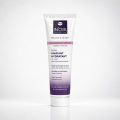
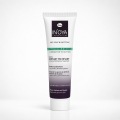
Depending on your skin type, the Hydrating Even-Tone Moisturizer or the Mattifying Even-Tone Moisturizer helps maintain skin comfort while gradually promoting a more even complexion.
Thanks to the patented technology developed by IN'OYA Laboratories, this step also helps reduce the risk of future pigmentation irregularities.
Our Recommendation
Choose the moisturizer that best matches your skin type:
- Dry skin: My Hydrating Even-Tone Moisturizer
- Combination or oily skin: My Mattifying Even-Tone Moisturizer
Step 3: Treat Dark Spots at Night with a Targeted Serum
Nighttime is the ideal period to support the skin's natural renewal process, making it the perfect time to apply a dark spot serum.
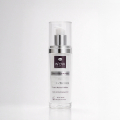
IN'OYA Dark Spot Serum was specifically developed to target pigmentation irregularities while respecting the unique needs of Black, Brown, and Mixed-Race skin.
Visible improvements may appear progressively depending on the age of the pigmentation, its cause, and how consistently the routine is followed.
- ✔ Apply the serum every evening.
- ✔ Don't stop using it after only a few days.
- ✔ Always follow with daily sunscreen in the morning.
Step 4: Prevent New Breakouts
If your dark spots are primarily caused by acne, treating the breakouts themselves is essential. Otherwise, each new blemish may leave behind another dark mark before previous ones have had time to fade.
ACN'OYA Anti-Blemish Treatment helps reduce acne while minimizing the risk of post-inflammatory pigmentation.
Step 5: Exfoliate Without Irritating the Skin
Gentle exfoliation once or twice a week gradually removes dead skin cells from the surface of the skin. This supports natural cell turnover and helps restore a brighter, more even complexion.
On the other hand, harsh scrubs can create micro-inflammation that worsens hyperpigmentation. Choose a gentle exfoliator specifically formulated for melanin-rich skin.
Step 6: Never Skip Sunscreen
This is probably the most overlooked step. Even the most effective dark spot serum cannot deliver its full benefits if the skin continues to be exposed to UV rays every day without protection.
Applying a broad-spectrum SPF 50 sunscreen helps reduce melanin stimulation, prevents existing spots from becoming darker, and limits the formation of new pigmentation.
Dermatologist's Advice
Daily sunscreen is recommended even on cloudy days. UVA rays—which contribute to skin aging and pigmentation—can penetrate clouds and glass.
Your Complete Dark Spot Routine in One Simple Journey
✔ Cleanse
✔ Moisturize
✔ Correct Dark Spots
✔ Prevent Breakouts
✔ Gently Exfoliate
✔ Protect with Sunscreen
A simple, effective skincare routine specifically designed for Black, Brown, and Mixed-Race skin.
Discover the Complete MEL'OYA® Routine →Frequently Asked Questions About Dark Spots and Hyperpigmentation
Find answers to the most common questions about hyperpigmentation, dark spot treatments, and the best skincare practices for Black, Brown, and Mixed-Race skin.
Can Dark Spots Disappear Completely?
Post-inflammatory hyperpigmentation can fade significantly and, in some cases, become almost invisible. However, results depend on the underlying cause, the depth of the pigmentation, how long it has been present, sun exposure, and whether inflammation is still ongoing.
Recent, superficial dark spots generally respond more quickly to skincare than older or deeper pigmentation. That's why early treatment is recommended while avoiding harsh products that may trigger additional irritation.
How Long Does It Take for Dark Spots to Fade?
There is no universal timeline. Recent pigmentation may begin to improve after several weeks of consistent skincare, while older or deeper dark spots can take several months to fade.
Results also depend on what caused the pigmentation. If new pimples, ingrown hairs, or inflammatory flare-ups continue to occur, new marks may appear before previous ones have fully disappeared.
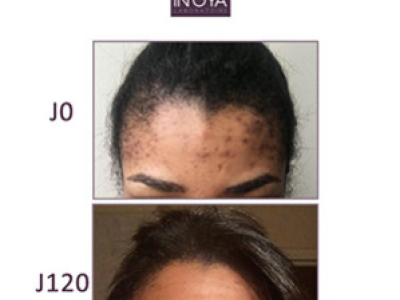
Take a photograph every four weeks under the same lighting conditions. Comparing photos over time is generally much more useful than checking your skin every day.
Which Treatment Should I Choose for Dark Spots on Black Skin?
Choose a treatment designed to gradually correct pigmentation without damaging the skin barrier. It should be part of a complete skincare routine that includes gentle cleansing, daily moisturization, and sun protection.
IN'OYA Dark Spot Serum has been specifically developed to target pigmentation irregularities in Black, Brown, and Mixed-Race skin. It should be applied consistently to clean skin and followed by a moisturizer adapted to your skin type.
If your pigmentation is acne-related, treating the breakouts themselves is equally important. Without controlling inflammation, new dark spots will continue to develop.
Should Black Skin Wear Sunscreen?
Yes. Melanin provides partial natural protection, but it does not completely block the effects of ultraviolet radiation. UV rays can stimulate melanin production, maintain existing pigmentation, and make dark spots even more noticeable.
Daily sunscreen becomes especially important when treating hyperpigmentation, melasma, post-inflammatory pigmentation, or when using exfoliating skincare products.
Choose a broad-spectrum sunscreen suitable for your skin type and reapply it according to your level of sun exposure and the manufacturer's recommendations.
Can Lemon Juice or DIY Remedies Remove Dark Spots?
Lemon juice, vinegar, baking soda, and highly concentrated essential oil mixtures are not scientifically validated treatments for hyperpigmentation.
Their acidity or irritating properties may damage the skin barrier, causing redness, burns, or increased sun sensitivity. In melanin-rich skin, this additional inflammation can actually trigger more pigmentation and make dark spots even darker.
Never apply pure lemon juice, bleach, toothpaste, or other harsh homemade mixtures directly onto dark spots.
Can Chemical Peels or Laser Treatments Be Performed on Black Skin?
Yes, certain chemical peels, laser treatments, and other dermatological procedures can be safely performed on Black skin—but only after a proper medical evaluation. Treatments that are too aggressive or incorrectly performed may trigger post-inflammatory hyperpigmentation.
The most appropriate technique depends on your skin tone, the cause and depth of the pigmentation, previous treatments, and the overall condition of your skin barrier.
These procedures should always be performed by a qualified dermatologist or physician with experience treating melanin-rich skin.
When Should You See a Dermatologist About a Dark Spot?
Consult a dermatologist if a dark spot appears suddenly without an obvious cause, changes in size, shape, or color, has irregular borders, bleeds, remains itchy, or becomes painful.
Medical advice is also recommended for widespread melasma, persistent inflammatory acne, thick or keloid scars, suspected exogenous ochronosis, or when pigmentation continues to worsen despite stopping irritating products.
You should also seek professional advice if you notice no improvement after several months of following a consistent skincare routine.
An online article or photograph cannot provide a reliable medical diagnosis. If you are unsure about the nature of a pigmented lesion, consult a healthcare professional.
An Expert and Responsible Approach to Hyperpigmentation
Pigmentation disorders affecting Black, Brown, and Mixed-Race skin require a gradual approach that respects the skin barrier. Post-inflammatory hyperpigmentation tends to be more noticeable and longer-lasting in melanin-rich skin, particularly after acne, irritation, burns, ingrown hairs, or eczema flare-ups.
The goal of a cosmetic skincare routine is not to bleach the skin or alter its natural color. Instead, it aims to reduce the appearance of pigmentation irregularities, improve overall skin tone, and help prevent new dark spots from forming.
Principles of an Effective and Skin-Respecting Approach
- Identify the cause: acne, irritation, shaving, eczema, injury, sun exposure, or hormonal changes.
- Control inflammation: prevent breakouts and irritation that can lead to new pigmentation.
- Protect the skin barrier: cleanse gently and moisturize according to your skin's needs.
- Treat progressively: use skincare consistently instead of relying on harsh active ingredients.
- Protect your skin: apply appropriate sun protection to help prevent existing spots from becoming darker.
- Seek medical advice when necessary: consult a healthcare professional if a dark spot is unusual, changing, or persistent.
Medical Information & Transparency
This content provides general educational information about hyperpigmentation and dark spots. It is not intended to replace medical advice, diagnosis, or treatment from a qualified healthcare professional. IN'OYA cosmetic products are designed to care for the skin and improve its appearance. Individual results may vary.
Gradually Restore a More Even Skin Tone
Hyperpigmentation can take time to fade, especially when dark spots are long-standing or continually triggered by acne, ingrown hairs, eczema, or sun exposure.
The most effective strategy is to reduce inflammation, cleanse gently, moisturize daily, consistently apply targeted treatments, and protect your skin from UV exposure.
The MEL'OYA® skincare routine has been specifically developed to help Black, Brown, and Mixed-Race skin gradually achieve a clearer, more even complexion.
Discover the MEL'OYA® Dark Spot Routine →Results may vary depending on your skin type, the cause and age of the pigmentation, and how consistently the products are used.
Scientific References
The following publications provide further insight into the mechanisms and treatment of post-inflammatory hyperpigmentation, particularly in melanin-rich skin.
- Davis EC, Callender VD. Postinflammatory Hyperpigmentation: A Review of the Epidemiology, Clinical Features, and Treatment Options in Skin of Color. Journal of Clinical and Aesthetic Dermatology. 2010;3(7):20–31. PMID: 20725554.
- Maghfour J, Olayinka J, Hamzavi IH, Mohammad TF. A Focused Review on the Pathophysiology of Post-Inflammatory Hyperpigmentation. Pigment Cell & Melanoma Research. 2022;35(3):320–327.
- Kashetsky N, Feschuk A, Pratt M. Post-Inflammatory Hyperpigmentation: A Systematic Review of Treatment Outcomes. Journal of the European Academy of Dermatology and Venereology. 2024;38(3):470–479.
- Mar K, et al. Treatment of Post-Inflammatory Hyperpigmentation in Skin of Colour: A Systematic Review. Journal of Cutaneous Medicine and Surgery. 2024.
- Eimpunth S, Wanitphakdeedecha R, Manuskiatti W. A Focused Review on Acne-Induced and Aesthetic Procedure-Related Post-Inflammatory Hyperpigmentation in Asians. Journal of the European Academy of Dermatology and Venereology. 2013;27(Suppl.1):7–18.
- Shokeen D. Post-Inflammatory Hyperpigmentation in Patients with Skin of Color. Cutis. 2016;97(1):E9–E11.
- Taylor SC, Cook-Bolden F, Rahman Z, Strachan D. Acne Vulgaris in Skin of Color. Journal of the American Academy of Dermatology. 2002;46(2 Suppl.):S98–S106.